bp gets DOI approval for Kaskida project in deepwater US Gulf of Mexico
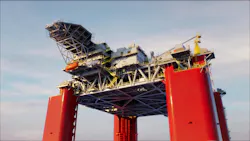
bp has received approval from the US Department of Interior to move forward with its $5-billion Kaskida deepwater field development project in the US Gulf of Mexico, according to reports from Reuters, Bloomberg, and the New York Times.
The DOI’s approval of Kaskida follows a year-long review of the company’s field development plan. The development centers on a semisubmersible floating production platform designed to produce up to 80,000 barrels of crude oil per day from six wells, in its first stage.
Located in the Keathley Canyon area about 250 miles southwest of New Orleans, the Kaskida field is part of the broader Paleogene geological formation, an area that bp believes could ultimately unlock as much as 10 billion barrels of discovered resources in place across multiple nearby discoveries including Tiber.
bp discovered the Kaskida field in 2006 and has spent years working with the offshore industry to develop the high-pressure drilling technologies needed to produce from reservoirs in the Paleogene formation. The development will require well equipment capable of operating at pressures of up to 20,000 pounds per square inch, representing a new generation of deepwater drilling capability.
The company plans to use a simplified and standardized platform design that can be replicated across future Gulf projects, a strategy aimed at reducing construction costs, improving safety and accelerating development timelines for additional fields in the region. “By employing an industry-led design solution,” said Gordon Birrell, Executive Vice President of Production and Operations for bp, “Kaskida will be simpler to construct and simpler to operate, enhancing safety and delivering greater value for bp.”
First oil on Kaskida is expected to start flowing in 2029, and the field is estimated to produce about 275 million barrels of oil equivalent during its initial phase.
