Commentary: The Gulf of America doesn't wait for perfect conditions
Key Highlights
- The Gulf of America’s deepwater industry has built a safe, capable environment through decades of experience and innovation.
- Projects like Salamanca demonstrate sustainable practices by refurbishing existing infrastructure, reducing emissions, and supporting local economies.
- High-pressure, high-temperature developments like Anchor and Shenandoah expand the basin’s resource potential with purpose-built technology.
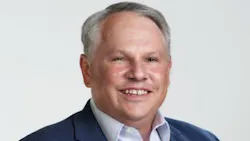
By Eric Zimmermann, COO of LLOG and Chair of the National Ocean Industries Association
The Gulf of America has never been a basin that waits for easy conditions. Over decades of deepwater work, the offshore industry has built one of the most capable and safest operating environments in the world and the geologic and engineering cultures that come with that ecosystem keeps driving the next generation of solutions.
Across the Gulf right now, companies are developing resources through engineering ingenuity, operational discipline, and a willingness to rethink how projects get built; resources that would have been out of reach a decade ago. That evolution is visible in several projects reshaping what deepwater development looks like in the 2020s.
At LLOG, now part of Harbour Energy, our Salamanca project is a good place to start because it reflects a project philosophy that the Gulf of America is increasingly putting to work. Salamanca, our joint development of the Leon and Castile discoveries in Keathley Canyon, produces through a floating production unit refurbished from a previously decommissioned Gulf of America facility. The unit can handle up to 60,000 barrels of oil per day and 40 million cubic feet of natural gas per day. This is meaningful production capacity being brought online through a fundamentally different project model.
Refurbishing an existing hull rather than fabricating a new one cuts schedule significantly. It also cuts emissions, roughly 87% less emissions impact compared to new construction. And it allowed a piece of offshore infrastructure to remain in productive service rather than being sent off to the scrapyard. Furthermore, all of the major construction on the project happened on the Gulf Coast in yards in Texas and Louisiana. We call that economic sustainability that stays in our country. That's good engineering, good economics, and good environmental stewardship in the same decision.
Salamanca also points to something broader. There are assets in these waters that still have structural integrity and productive life left in them. With the right engineering approach, those assets don’t become liabilities, they become the foundation of the next project.
The same spirit shows up differently in Chevron's Anchor, 140 miles offshore Louisiana, the first commercial-scale high-pressure deepwater development in the Gulf of America, or anywhere in the world at that depth. Anchor required purpose-built equipment capable of handling 20,000 psi reservoir pressures, technology the industry had to develop specifically for this class of reservoir. Its success opens the door to a generation of HP/HT resources that were previously out of reach.
Beacon Offshore Energy’s Shenandoah project, also an HP/HT development, followed a similar path, proving that this class of reservoir can be developed safely, efficiently, and at commercial scale. Together, Anchor and Shenandoah have expanded the map of what’s producible in the Gulf.
What connects Anchor, Shenandoah, and Salamanca isn't a single technology or technique. It's a mindset. The Gulf of America has always rewarded problem solvers who treat constraints as design problems rather than stopping points. High pressure? Engineer through it. High cost? Rethink the model. Existing infrastructure sitting idle? Put it back to work.
That culture is the Gulf’s most durable competitive advantage. It's why the basin continues to attract capital, develop talent, and set the technical standard for deepwater operations globally and maintain the Gulf’s position as a global superbasin. And it's why, as the energy landscape shifts and new demands are placed on offshore infrastructure, the Gulf is positioned to lead not just on production, but on carbon management, AI and digital operations, and the emerging sectors that will define the next chapter of offshore development.
The Gulf of America has never asked for easy conditions. It has just kept producing.