Op-ed: Operational efficiency anchors the Gulf of America’s global relevance
By Erik Milito, National Ocean Industries Association (NOIA)
The Gulf of America has long been defined by technical ambition, operational scale and a deeply embedded culture of safety.
As the basin matures, performance increasingly depends on how efficiently, reliably and safely operators and offshore partners manage existing infrastructure under more demanding conditions. That includes deeper and more complex reservoirs, maturing facilities, tighter project economics, and growing expectations around uptime and operational integrity, resilience and performance.
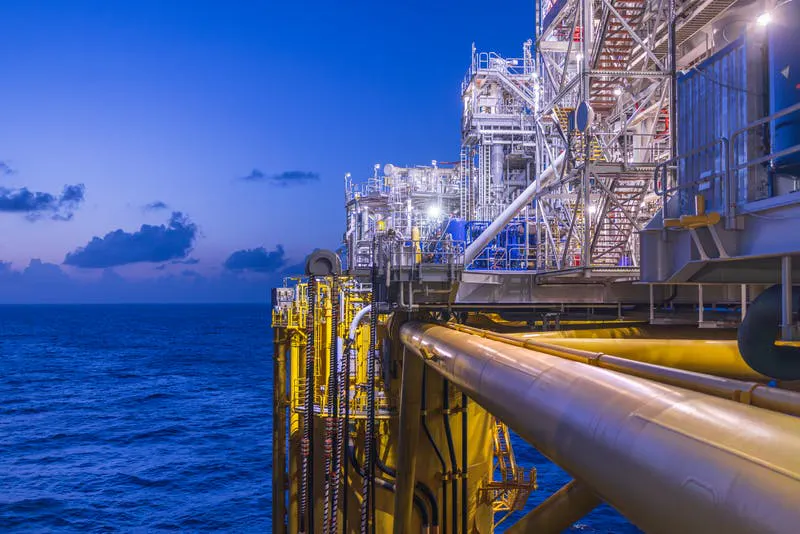
Across the Gulf, companies are finding new ways to improve performance from assets already in place. Existing hubs are being optimized. Tiebacks are being developed with greater precision. Maintenance strategies are becoming more predictive and less reactive. Digital tools are helping operators identify risks earlier, reduce downtime, make better decisions in real time and improve efficiency.
These gains matter. In offshore environments, small improvements in reliability or efficiency can translate into major operational and economic value over the life of an asset. Planned maintenance windows, subsea interventions, vessel activity, production schedules and logistics all have to work in concert. The margin for inefficiency is narrow, and the rewards for getting right are significant.
That is where the Gulf of America continues to stand out.
The region benefits from a deeply experienced workforce and an integrated offshore ecosystem that includes operators, service companies, subsea specialists, marine providers, fabricators, technology developers and logistics teams. Over decades of offshore activity, that network has built an operational depth that few regions can match.
Remote monitoring, digital twins, advanced subsea controls, real-time production data, predictive maintenance and improved flow assurance are increasingly shaping day-to-day offshore operations. These tools are helping teams extend asset life, reduce unplanned outages, improve safety outcomes and maximize the value of infrastructure that has already required major capital investment.
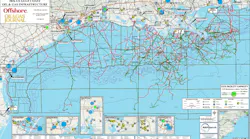 2026 US gulf Coast Oil & Gas Infrastructure Map
Subsea tiebacks remain one of the clearest examples. By connecting new reservoirs back to existing facilities, operators can shorten timelines, improve project economics and make better use of infrastructure already in place. In a basin with substantial installed capacity and decades of engineering knowledge, that kind of optimization has become an increasingly important part of long-term performance.
Execution in the Gulf also depends on coordination. Offshore performance is shaped by how effectively multiple systems and teams align around a common operational plan. Vessel schedules, subsea work scopes, facility maintenance, production planning, inspections and logistics all have to be sequenced with precision. When those systems are integrated well, across various teams and companies, the result is stronger uptime, safer operations and more resilient assets.
The Gulf of America remains one of the most important offshore producing regions in the world, but it is also becoming a leading example of how mature offshore systems continue to generate value over time. That matters to operators focused on returns, to service and supply companies investing in next-generation capabilities, and to investors looking for offshore regions with durable long-term relevance.
It also has broader implications for the future of offshore activity. Many of the capabilities being refined in the Gulf of America, such as subsea engineering, remote operations, marine logistics, inspection technologies and integrated offshore execution, are directly relevant to adjacent sectors such as carbon management, offshore wind support and ocean mineral exploration.
 remote operations concept
The basin’s significance increasingly rests in its ability to adapt, optimize and perform under increasing global competition. That is what mature leadership looks like offshore.
The Gulf of America has spent decades building the infrastructure, workforce and operational expertise that define it today. The next phase of its strength will come from how effectively that foundation is used.
Execution is becoming one of the basin’s clearest competitive advantages. For the offshore industry, that is a meaningful development worth paying attention to.
This article is part of Offshore's 2026 Gulf of Mexico Regional Report.
About the Author
 Erik Milito
Erik Milito
Erik Milito is the president of the National Ocean Industries Association (NOIA), representing the interests of the offshore oil, gas, wind, carbon capture and ocean mineral industries, among other offshore energy segments. He took on this role in November 2019, bringing more than 20 years of experience in the energy policy sector. Milito is also one of Offshore's 2026 Editorial Advisory Board members.