Offshore leasing uncertainty drives higher energy costs for US consumers, CEA says
Key Highlights
- Delays in offshore lease sales create market uncertainty, prompting companies to invest in other countries, which impacts US energy supply and consumer prices.
- Permitting delays, especially under NEPA, significantly slow down offshore projects, underscoring the need for red tape reduction while maintaining environmental standards.
- A consumer-first offshore energy strategy involves predictable leasing, permitting reform, and ongoing industry investment in communities and workforce development.
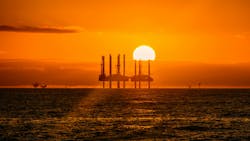
A consumer-first approach in offshore energy policies ensures affordability, job creation and energy security, according to Kaitlin McKay, COO of Consumer Energy Alliance (CEA).
She recently chatted with Offshore, sharing her perspective on policies affecting offshore capital planning, lease availability and the affordability of offshore-produced energy. In this exclusive Q&A interview, McKay outlines the consumer‑level impacts of slowed leasing, National Environmental Policy Act (NEPA) bottlenecks and regulatory unpredictability as well as why stable offshore development remains critical to the US energy mix.
Offshore: How do offshore lease sale delays or uncertainty affect long‑term energy affordability and reliability for US consumers?

McKay: Delaying or canceling offshore oil and gas lease sales creates market uncertainty for companies that are looking to invest billions of dollars in energy production. Regulatory certainty for such large investments is critical. Without that certainty, companies start looking at other countries and basins for productions, such as Brazil or Guyana.
This has a large impact on consumers. For example, the Gulf of America produces ~14% of our nation’s crude oil supply—that is roughly 1.8 million barrels per day—enough to fuel 150,000 passenger cars a year. The oil that is produced in the Gulf is largely refined along the Gulf Coast where 45% is turned into gasoline with the rest refined into diesel and jet fuel. The ability to produce and refine along the Gulf Coast allows prices to remain affordable and reliable for consumers.
Offshore: Offshore permitting timelines remain a critical bottleneck. Where does CEA see the most urgent need for permitting reform to ensure projects—offshore oil, gas or wind—can advance without driving up costs for consumers?
McKay: Permitting bottlenecks are a big issue, not just for offshore energy, but for energy infrastructure of all types.
One of the largest bottlenecks for permitting timelines is the National Environmental Policy Act (NEPA). Creating environmental impact statements (EIS) can take up to 4.5 years to complete, causing significant delays in construction of projects and production. NEPA has also been weaponized to cause delays in projects by filing frivolous lawsuits that can hold up projects for months and even years. NEPA remains one of the largest barriers to building energy infrastructure that helps fuel everyday life for Americans.
CEA believes by cutting red tape, while still maintaining our stringent environmental standards, is critical to energy production.
Offshore: CEA emphasizes consumer impacts during extreme weather events. How do Gulf of Mexico offshore assets fit into national energy reliability during hurricanes, winter storms and peak-load events?
McKay: It takes all energy resources to ensure that our energy system stays reliable and disruptions stay at a minimum. Gulf energy plays a huge part of that and helps to ensure that recovery after a storm is fast and that the lights and heat stays on for consumers during storms.
Offshore: Federal energy policy debates often overlook consumer perspectives. What is the biggest disconnect between policymakers shaping offshore energy regulations and the families or small businesses CEA represents?
McKay: The largest disconnect between policymakers and families and businesses are top down priorities versus bottom up policy. Families and businesses see the impacts of policies on a daily basis. Affordability is the largest issue facing consumers at the moment. With the offshore oil and gas industry playing a large role in gasoline, diesel, jet fuel and other energy for consumers, ensuring that we have regulations that will directly benefit growth in these areas will help bring stability to families and businesses.
Offshore: Offshore development supports jobs and economic activity across coastal communities. How does CEA evaluate the local economic ripple effects of offshore policy changes, and what trends do you foresee in the offshore workforce?
McKay: The offshore energy industry supports 266,000 jobs across the United States. Many of those jobs are in coastal communities with the workforce that service the industry, manufacturing, refining and other indirect jobs. With the regulatory certainty of planned and mandated future lease sales, industry is more likely to continue to make investments to create additional jobs and opportunities for the workforce. Additionally, opportunities for expanded access in the Gulf of America may create more need for the workforce. For example, the ports in Alabama and Mississippi may see a greater increase in traffic due to leasing in new areas.
Offshore: As data centers and industrial loads grow, grid and energy demand pressures are rising. What role should offshore production (and possibly offshore wind) play in meeting the surge in US electricity demand without compromising affordability?
McKay: Traditional fuels such as oil and natural gas are a necessity to ensure that supply keeps up with growth, which also ensures that consumers prices stay affordable. The great thing is that America can control its own destiny and if policies remain in place to safeguard the continued flow of energy resources. We can grow our demand and supply at the same time.
Offshore: From your perspective, what does a pragmatic, consumer-first offshore energy strategy look like over the next decade?
McKay: Consumer-first policies consider the need for affordability and reliability for consumers. This includes a predictable leasing schedule, cutting the red tape for energy permitting, and continued industry investment in workforce and in the communities that service the industry.
About the Author
 Ariana Hurtado
Ariana Hurtado
Editor-in-Chief
With more than a decade of copy editing, project management and journalism experience, Ariana Hurtado is a seasoned managing editor born and raised in the energy capital of the world—Houston, Texas. She currently serves as editor-in-chief of Offshore, overseeing the editorial team, its content and the brand's growth from a digital perspective.
Utilizing her editorial expertise, she manages digital media for the Offshore team. She also helps create and oversee new special industry reports and revolutionizes existing supplements, while also contributing content to Offshore's magazine, newsletters and website as a copy editor and writer.
Prior to her current role, she served as Offshore's editor and director of special reports from April 2022 to December 2024. Before joining Offshore, she served as senior managing editor of publications with Hart Energy. Prior to her nearly nine years with Hart, she worked on the copy desk as a news editor at the Houston Chronicle.
She graduated magna cum laude with a bachelor's degree in journalism from the University of Houston.