Norway roundup: Troll export plans revised, Grimsnes discovery advances, DNO expands portfolio
Key highlights:
-
The Troll partnership has canceled plans for a second electric export compressor on Troll C, a move expected to help maintain gas supplies to Europe while extending the field's productive life.
-
Equinor's Grimsnes discovery near Oseberg could be fast-tracked through existing infrastructure, highlighting continued near-field growth opportunities in the mature North Sea.
-
DNO and Kistos are expanding their Norwegian Continental Shelf positions through acquisitions and licensing activity aimed at supporting future exploration and development opportunities.

Operators across the Norwegian Continental Shelf (NCS) are advancing a mix of production, exploration and portfolio initiatives, from preserving Troll gas export capacity and progressing a new North Sea discovery to acquisitions and licensing activity aimed at expanding future resource opportunities.
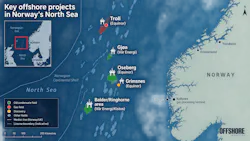
Troll partners revise compressor plans to protect gas exports
Troll update at a glance:
-
Operator: Equinor
-
Asset: Troll Field, North Sea
-
Platform: Troll C
-
Change: Second electric export compressor canceled
-
Additional gas to Europe: ~2.3 Bcm in 2027-2028
-
Expected field life: Around 2050
Equinor, on behalf of The Troll license partnership in the North Sea, has informed Norway’s Ministry of Energy that the Troll West Electrification (TWEL) project will be completed after commissioning the first electric export compressor on the Troll C platform.
However, a second electric export compressor will not be installed on Troll C, as originally advised in the 2021 plan for development and operation (PDO).
The decision follows a review of how certain assumptions had changed since the PDO was approved in 2021. At that time, a temporary loss of capacity on the platform was covered via increased production from Troll A.
Since 2023, Equinor explained, the Troll Field has produced at maximum capacity year-round, increasing the significance and value of available compressor capacity on Troll C compared with the underlying assumptions of the original project proposal.
Installing the second electric export compressor and the associated modification period would have caused reduced production from Troll C for up to 21 months. And the additional compressor would only have been needed until demand for it ceases, as expected, in the mid-2030s.
Troll C is set to remain in operation until around 2050. The partners believe their decision will also help maintain stable gas supplies to Europe, leading to around 2.3 Bcm of additional gas being made available to the European market in 2027 and 2028.
In 1996, Troll A became was the first platform on the NCS to receive power from shore, with Troll B and Troll C both part-electrified in 2024.
Equinor claims the TWEL project has cut CO2 emissions from the Troll area by around 330,000 mt annually, equivalent to around 75% of the emission reductions of 440,000 mt/year planned in the PDO.
Following the completion of TWEL, Troll B will operate with one electrified and two gas-driven export compressors, with Troll C operating with two electric and one gas-driven export compressors.
The reduced power demand on Troll C should free up around 26 MW of reserved power capacity at the onshore Kollsnes reception terminal for other purposes.
While operators continue optimizing production from mature assets such as Troll, exploration efforts near existing infrastructure are also unlocking new development opportunities elsewhere on the NCS.
Grimsnes discovery could support fast-track tieback development
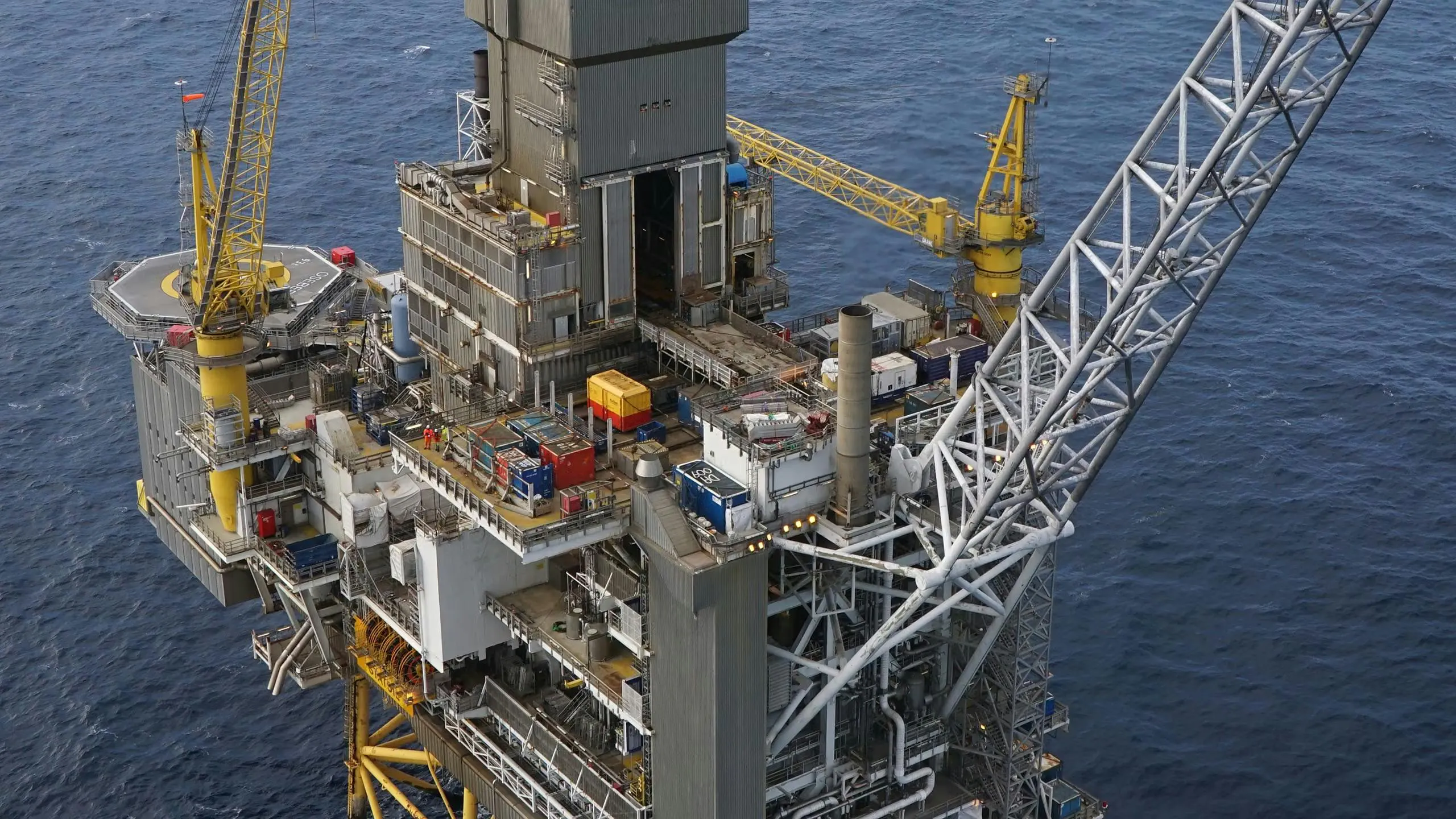
Equinor also announced a new oil and gas discovery named Grimsnes, close to the Oseberg Field in the North Sea.
The Deepsea Bergen semisub rig drilled exploration well 30/8-7 S in 96 m of water in PL 19, with early analysis of the find suggesting 19-50 MMboe recoverable. The rig will next drill a development well for Equinor on the Visund Sør Field.
Grimsnes is 15 km southwest of the Oseberg Sør platform and 20 km south of the Tune Field, in the far southern portion of the license.
According to the Norwegian Offshore Directorate, the well encountered a combined oil and gas column (39 m of gas and 15 m of oil) in the Tarbert Formation.
“This confirms that the area around the Oseberg Field remains very attractive,” said Frode Skarstein, SVP for Exploration and Production West at Equinor. “We plan to quickly tie the discovery back to existing subsea facilities and produce the volumes through the Oseberg Sør platform.”

Between now and 2035, Equinor plans to drill 200 near-field Norwegian exploration wells and enact around 75 new subsea developments.
“To bring these discoveries on stream, we must radically change how we plan and develop subsea projects," said Gunnar Nakken, SVP for projects and subsea on the NCS. “Our aim is to halve both costs and the time from discovery to production through simpler and faster processes, more standardisation, repeatable solutions and more extensive use of industry standards. We expect the partnership to make an investment decision for Grimsnes as early as next summer, with production within three years.”
The most likely solution is a development featuring two or three wells in a standard four-slot template. Equinor plans to start procurement of subsea production equipment early in 2027, long before the project is sanctioned.
Since the equipment will be standardised, it can be redeployed elsewhere if the project is not approved either by the partners or the authorities.
DNO strengthens North Sea hub position through Sval transaction
In other developments offshore Norway, DNO reported in its latest quarterly update has completed a multi-asset North Sea transaction with Vår Energi under which it gains a 5% interest in the Gjøa field and Gjøa Nord discovery, trading interests in the Nova and Ringhorne Nord fields.
The company said it had now secured a strategic ownership in the offshore Gjøa hub, which Vår Energi operates.
DNO also revealed that a pilot well at the Aker BP-operated Symra Field (DNO 20%), drilled to appraise previous discoveries in the Heimdal Formation, had raised estimated recoverable volumes at Symra by up to 25%. Symra has been developed via a subsea tieback to the Ivar Aasen platform.
Kistos secures additional Norwegian exploration licenses
Finally, Kistos has signed a Sales and Purchase Agreement with Vår Energi to acquire a 10% interest in the PL 169E, PL 956 and PL 956B for $12.9 million.
Assuming approval from Norway’s Energy Ministry, this would give Kistos a uniform working interest across the Balder-Ringhorne fields, the Ringhorne East Unit, and the part of the Ringhorne Nord Field within PL 956 and PL 956B, in line with its existing 10% stake in PL 027.
Aligning the interests of Vår and Kistos across the Balder Area, the company added, should lead to more efficient field development and reduced operating costs.
About the Author
 Jeremy Beckman
Jeremy Beckman
Staff Writer / Editor, Europe
Jeremy Beckman has been Editor Europe, Offshore since 1992. Prior to joining Offshore he was a freelance journalist for eight years, working for a variety of electronics, computing and scientific journals in the UK. He regularly writes news columns on trends and events both in the NW Europe offshore region and globally. He also writes features on developments and technology in exploration and production.
Related
