UK approval of Jackdaw North Sea gas project appears to be imminent
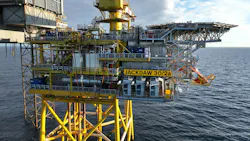
The UK government is expected to grant consent for the Jackdaw gas field in the coming weeks, according to multiple government and industry sources. The decision would allow the nearly complete project to begin supplying gas as early as this winter.
Jackdaw, located approximately 150 miles east of Aberdeen in the Central North Sea, is operated by Adura, the joint venture between Shell and Equinor. The field consists of a not-permanently-attended wellhead platform with four wells, tied back to the existing Shearwater platform. Construction is reported to be 99% complete.
At peak production, Jackdaw is projected to deliver around 6% of UK continental shelf gas supply—enough to heat about 1.4 million homes. Operators say it would also help extend the life of the Shearwater hub and reduce reliance on imports, which currently account for roughly 60% of UK gas. Combined with the larger Rosebank project, the two developments are estimated to support billions in economic activity and tax revenue over their lifetimes.
The project was first approved in 2022 under the previous Conservative government. Those consents were later quashed by the Court of Session in 2025 following a legal challenge by environmental groups. Campaigners argued that assessments failed to properly account for “Scope 3” emissions—the carbon released when the gas is burned by consumers. Fresh environmental information was submitted and a public consultation closed in August 2026. The final decision now rests with Energy Secretary Miatta Fahnbulleh.
Sources close to the process indicate Fahnbulleh could signal approval as early as next week, with formal consent from the North Sea Transition Authority following shortly afterward—potentially mid-September, before Parliament recesses for party conference season. Prime Minister Andy Burnham is expected to visit Aberdeen around the same time. A decision on Rosebank is anticipated later.
The Department for Energy Security and Net Zero has declined to comment on speculation, stating only that “the North Sea remains a vital national asset and oil and gas will continue to play an important role in our energy system for decades to come.” Any decision, officials say, will consider environmental assessments and consultation responses.
Industry groups and opposition politicians have welcomed the prospect of approval, citing energy security, jobs in the supply chain, and tax revenues. Environmental campaigners and some climate scientists have criticized the move, arguing it is inconsistent with net-zero goals, especially after a summer of extreme weather. They note that direct new jobs specifically tied to Jackdaw operations are modest (around 27 additional roles, plus support for existing Shearwater positions) and that imported gas would still be needed.
Adura has said the field is ready to produce if consent is granted this month. The government has emphasized that existing licenses are being honored rather than new exploration licenses issued, in line with its stated policy.
About the Author
 Bruce Beaubouef
Bruce Beaubouef
Senior Lead Reporter / Managing Editor
Bruce Beaubouef is Managing Editor for Offshore magazine. In that capacity, he plans and oversees content for the magazine; writes features on technologies and trends for the magazine; writes news updates for the website; creates and moderates topical webinars; and creates videos that focus on offshore oil and gas and renewable energies. Beaubouef has been in the oil and gas trade media for 25 years, starting out as Editor of Hart’s Pipeline Digest in 1998. From there, he went on to serve as Associate Editor for Pipe Line and Gas Industry for Gulf Publishing for four years before rejoining Hart Publications as Editor of PipeLine and Gas Technology in 2003. He joined Offshore magazine as Managing Editor in 2010, at that time owned by PennWell Corp. Beaubouef earned his Ph.D. at the University of Houston in 1997, and his dissertation was published in book form by Texas A&M University Press in September 2007 as The Strategic Petroleum Reserve: U.S. Energy Security and Oil Politics, 1975-2005.
Related
