UK public consultation closes on $11-billion Rosebank North Sea project

Offshore Petroleum Regulator will now review the feedback; ultimate decision rests with Prime Minister Andy Burnham and his cabinet.

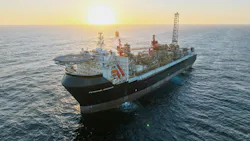
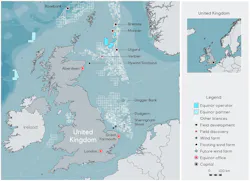
The public consultation period has officially closed for the controversial Rosebank oil field project, a massive £8.7-billion ($11.2-billion USD) drilling venture located 80 miles northwest of the Shetland Islands.

Project operator Adura—the North Sea joint venture combining the UK offshore operations of Shell and Equinor—welcomed the closing of the window, describing it as a "significant regulatory milestone" before a final UK government decision on the project.

The environmental review process was overseen by the Offshore Petroleum Regulator for Environment and Decommissioning (OPRED)—the British government agency responsible for regulating offshore oil and gas operations.

Following the close of the public feedback window, the final decision to approve or block the drilling permits now moves to senior British government officials, including UK Energy Secretary Miatta Fahnbulleh. If approved, the field is estimated to produce over 300 million barrels of oil, significantly impacting global energy supplies and transatlantic investments.

The conclusion of the Rosebank process by the Offshore Petroleum Regulator for Environment and Decommissioning (OPRED) follows the closing of a similar consultation for the Jackdaw gas field last week. Taken together, the two North Sea assets represent a combined £10.8 billion private sector investment, with more than three-quarters targeted directly within the UK supply chain.

Legal context and environmental disclosures

The consultations were triggered after a landmark January 2025 Scottish Court of Session ruling determined that the previous Conservative government’s approvals for both fields were unlawful. Adhering to the Supreme Court's precedent regarding the "Finch case," the court ruled that regulators had failed to assess "Scope 3" downstream emissions—the climate impact generated when the extracted oil and gas is ultimately burned by consumers.

In compliance with the court order, Adura published a fresh Environmental Impact Assessment (EIA), revealing that the fields will generate an estimated 250 million tonnes of greenhouse gases over their lifetime. While Adura's EIA concluded the emissions were "not significant" in a global context, climate advocacy groups heavily disputed the claims.

Economic and job projections

Adura and industry bodies like Offshore Energies UK (OEUK) have strongly urged the government to move forward with the energy projects to stabilize the UK economy and protect jobs. According to corporate disclosures released by Adura, the projects are projected to deliver:

  • Tax Revenues: £1.4 billion during the current parliament, rising to £3.8 billion by the end of the next.
  • Employment: 3,500 jobs at peak construction, alongside 880 long-term positions and 125 apprenticeships.
  • Peak Output: Rosebank is expected to yield 69,000 barrels of oil per day at its peak, accounting for roughly 10% of the UK’s total offshore oil output.

"Rosebank and Jackdaw are nationally significant projects," stated Adura CEO Neil McCulloch. "Together, they can provide more domestically produced energy, support high-quality jobs, and give the UK's world-class energy supply chain confidence for the future."

Next steps

With the public comment window fully closed, OPRED will aggregate and review the feedback. The ultimate decision to grant or deny the final drilling consents now sits squarely with Prime Minister Andy Burnham and his cabinet ministers.


About the Author

Bruce Beaubouef

Senior Lead Reporter / Managing Editor

Bruce Beaubouef is Managing Editor for Offshore magazine. In that capacity, he plans and oversees content for the magazine; writes features on technologies and trends for the magazine; writes news updates for the website; creates and moderates topical webinars; and creates videos that focus on offshore oil and gas and renewable energies. Beaubouef has been in the oil and gas trade media for 25 years, starting out as Editor of Hart’s Pipeline Digest in 1998. From there, he went on to serve as Associate Editor for Pipe Line and Gas Industry for Gulf Publishing for four years before rejoining Hart Publications as Editor of PipeLine and Gas Technology in 2003. He joined Offshore magazine as Managing Editor in 2010, at that time owned by PennWell Corp. Beaubouef earned his Ph.D. at the University of Houston in 1997, and his dissertation was published in book form by Texas A&M University Press in September 2007 as The Strategic Petroleum Reserve: U.S. Energy Security and Oil Politics, 1975-2005.

Sign up for our eNewsletters
Get the latest news and updates