bp exits Bay du Nord project offshore eastern Canada
Why this news matters:
-
Equinor’s move to take 100% ownership signals renewed confidence in Bay du Nord’s economics, with the company targeting a final investment decision in early 2027 after years of delays, cost reviews and project optimization.
-
The project remains one of Canada’s most significant offshore developments, with an estimated 400 MMboe resource in the initial phase and potential first oil in 2031 through an FPSO-based development.
-
bp’s exit reflects a broader trend of portfolio high-grading among major operators, while Equinor’s willingness to assume full ownership suggests it sees sufficient value and reduced risk in the deepwater project.
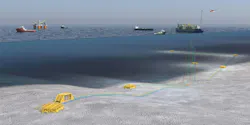
Equinor has agreed to acquire bp’s ~37.2% non-operated stake (across 10 licenses) in the multi-field deepwater Bay du Nord project offshore Newfoundland and Labrador.
On completion of the transaction, Equinor will have full (100%) ownership of the project. It aims to take FID on the development in early 2027, subject to approvals, market conditions, and internal decisions.
But the company will look to bring in new partners, said Philippe Mathieu, EVP at Equinor for Exploration and Production International. “Over the past few years, we have strengthened Bay du Nord by improving the business case and reducing key risks.”
The project is in the Flemish Pass basin, ~500 km offshore, with a development concept based on an FPSO with subsea tiebacks.
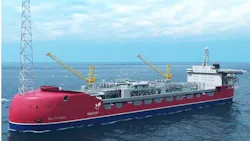
BW Energy was awarded the FPSO EED contract in April. Front-end engineering and design (FEED) overall are advancing, Equinor said, with a focus on capital efficiency, execution planning, overall project robustness, and continued engagement with provincial and federal governments.
The initial-phase ~400 MMboe development will comprise the 2013 Bay du Nord and 2020 Cambriol discoveries in 600–1,170 m water depth, with an estimated cost of CAD $14 billion. First oil should follow in 2031. Later tiebacks could include Cappahayden, Harpoon, and Baccalieu.
Project history
Bay du Nord represents Canada’s first major deepwater offshore oil development in the Atlantic. Equinor (then Statoil) made the initial discovery in 2013 in the Flemish Pass basin. Additional discoveries followed, including Cambriol in 2020. The project would open a new frontier basin for Newfoundland and Labrador.
A framework agreement with the provincial government was reached years earlier. The federal environmental assessment (under the Canadian Environmental Assessment Act, 2012) was approved in April 2022 with 137 conditions — the strongest GHG-related conditions imposed on any Canadian oil project at the time. Legal challenges by environmental groups (focused on downstream GHG emissions, marine shipping, and spill risks) were ultimately dismissed by the Federal Court of Appeal.
In 2022, bp acquired its stake from Cenovus (as part of bp’s simultaneous exit from the Sunrise oilsands project in Alberta). The project then faced a significant setback in May 2023 when Equinor announced it would pause development activities for up to three years. The company cited “significant cost increases” driven by market volatility and inflation, describing the project as “commercially challenged” at the time. Work on maturing the project (including FEED) continued, but the push toward sanction slowed.
Progress resumed with new agreements signed in March 2026 between the federal and Newfoundland and Labrador governments and the partners. These covered life-of-field benefits, royalties (potentially up to ~C$6.4 billion for the province in the first phase), and an equity option for the province (up to 10%).
bp exit
bp’s decision is explicitly framed as part of its ongoing portfolio simplification and disciplined capital allocation strategy. The company is focusing capital on higher-return opportunities and high-grading its upstream portfolio.
This is a non-operated stake, making it relatively straightforward to exit. bp has been consistent in recent years about streamlining its business, reducing debt, and prioritizing projects with stronger returns. The move aligns with that broader approach rather than signaling any sudden crisis specific to Bay du Nord.
Delays and challenges
The project has indeed faced repeated delays and challenges, but these are largely typical of large, complex, frontier deepwater developments. The main reasons for the delays include:
- Economic and cost pressures — The 2023 pause was driven by post-pandemic inflation, supply-chain disruptions, and higher development costs. Deepwater projects are inherently capital-intensive, and remote harsh-environment locations (500 km offshore) amplify logistics and execution risks.
- Long regulatory timeline — The federal environmental assessment process took years and resulted in numerous conditions. While the project ultimately received approval, this added time and uncertainty.
- First-of-a-kind nature in Canada — This would be Canada’s first deepwater FPSO development in the Atlantic. That brings technical, execution, and regulatory learning curves.
Environmental opposition and legal challenges added further scrutiny (particularly around spill probabilities and GHG emissions), but these did not ultimately block the project. Critics have highlighted risks (e.g., government scientists noted higher modeled spill probabilities than the operator’s estimates in some analyses), but approvals stood.
Many global deepwater projects (in Brazil, Gulf of Mexico, West Africa, Norway, etc.) have experienced multi-year delays, cost overruns, and pauses due to similar factors: inflation cycles, regulatory processes, and the need to improve economics. Equinor has publicly stated it has strengthened the business case and reduced key risks in recent years, which is why it is now comfortable moving toward FID as sole owner.
Shoring up the bottom line
bp is in the process of shoring up its bottom line and exiting “on the bubble” projects. bp’s own statements emphasize a need for portfolio simplification and strict capital discipline — allocating money to opportunities that create the most value for shareholders. Bay du Nord is a large, long-cycle, capital-intensive project with execution risks. As a non-operator, bp can exit cleanly while Equinor (the operator with deeper history in the asset) takes full control and potentially brings in new partners. Canadian regulations played a role in the overall timeline but do not appear to be the main driver of bp’s exit:
- The project cleared its major federal environmental assessment hurdle in 2022.
- Recent federal-provincial agreements show continued government support (benefits, royalties, equity option).
- There is no indication of new blocking regulations, sudden policy shifts, or insurmountable carbon-tax/emissions barriers specific to this project. Carbon pricing frameworks exist in Canada, but offshore specifics were addressed in the approvals process.
In short, bp is high-grading its portfolio in line with its stated strategy. Equinor, by contrast, sees enough improvement in the project’s economics and risk profile to take 100% ownership and push toward sanction in early 2027.
About the Author
 Jeremy Beckman
Jeremy Beckman
Staff Writer / Editor, Europe
Jeremy Beckman has been Editor Europe, Offshore since 1992. Prior to joining Offshore he was a freelance journalist for eight years, working for a variety of electronics, computing and scientific journals in the UK. He regularly writes news columns on trends and events both in the NW Europe offshore region and globally. He also writes features on developments and technology in exploration and production.