LedaFlow Technologies forms research consortium to de-risk long tiebacks
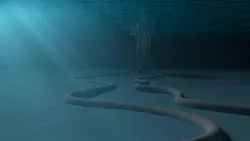
LedaFlow Technologies has formed a research consortium, HyWax, to develop and validate new flow models for the transport of wax and hydrate slurries in long subsea pipelines.
The ultimate goal will be to help operators assess and de-risk significantly longer tiebacks than are practical today.
Besides LedaFlow Technologies, the HyWax consortium is comprised of ConocoPhillips, TotalEnergies, Vår Energi, Falkor (formerly Kongsberg Digital) and SINTEF Industry. The project is supported by The Research Council of Norway and was presented at the ONS 2026 event in August.
Rather than relying on energy-intensive heating and chemicals to prevent wax and hydrate blockages, the HyWax group is seeking to develop a controlled, flowable slurry approach. The technology aims to unlock direct-to-shore subsea pipelines or long subsea tiebacks, simplifying offshore logistics and reducing capex/opex and lifecycle emissions.
According to LedaFlow Board Member Vanessa Richon of TotalEnergies, direct-to-shore slurry transport models could potentially save several hundred millions of dollars on a single development project.
“The HyWax consortium is a central piece of our long-term strategy to enable and de-risk ultra-long tieback solutions,” said Jan Gerhard Norstrøm, Managing Director at LedaFlow Technologies DA. “It delivers on our vision to bring next-generation physics closer to actual simulator execution, de-risking low-emission production at a significantly lower cost.”
The consortium says that it will seek to develop advanced multi-component slurry transport models within the LedaFlow simulator. These models are designed to derisk and hence enable the safe transport of unprocessed oil and natural gas over unprecedented distances without pipeline insulation.
Currently, the world’s longest subsea tiebacks are limited to roughly 60 km for oil fields (note that most oil field tiebacks are significantly shorter) and 200 km for gas fields because of flow assurance constraints. As unprocessed hydrocarbons cool down over long distances, they inevitably trigger the risk of formation of blockages by wax precipitation and gas hydrates agglomeration.
Historically, the offshore energy industry has worked around these fluid limitations by deploying capital-intensive fixed platforms or FPSO units to process fluids locally.
Alternatively, operators have relied on high-cost pipeline heating or aggressive chemical injections — both of which introduce significant environmental liabilities and carry substantial operational overhead for long-distance transport.
HyWax seeks to offer another alternative by converting wax and hydrates into a manageable, stable slurry. In turn, the technology is expected to enable significantly extended subsea tiebacks and direct-to-shore subsea pipelines while streamlining offshore logistics, radically reducing capex, and lowering total lifecycle carbon emissions.
About the Author
 Bruce Beaubouef
Senior Lead Reporter / Managing Editor
Bruce Beaubouef is Managing Editor for Offshore magazine. In that capacity, he plans and oversees content for the magazine; writes features on technologies and trends for the magazine; writes news updates for the website; creates and moderates topical webinars; and creates videos that focus on offshore oil and gas and renewable energies. Beaubouef has been in the oil and gas trade media for 25 years, starting out as Editor of Hart’s Pipeline Digest in 1998. From there, he went on to serve as Associate Editor for Pipe Line and Gas Industry for Gulf Publishing for four years before rejoining Hart Publications as Editor of PipeLine and Gas Technology in 2003. He joined Offshore magazine as Managing Editor in 2010, at that time owned by PennWell Corp. Beaubouef earned his Ph.D. at the University of Houston in 1997, and his dissertation was published in book form by Texas A&M University Press in September 2007 as The Strategic Petroleum Reserve: U.S. Energy Security and Oil Politics, 1975-2005.