New sidetrack drilling, DP production mode extend Lufeng life

Eldon Ball
Editor in Chief
The Lufeng oil field operated by Statoil in the South China Sea reflects how innovative thinking and a willingness to try new technology can result in unanticipated profits.
Lufeng was originally brought on stream by Statoil in December 1997. At the time, it represented a milestone for Statoil as its first field development as operator outside Norway.
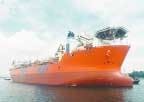
The field lies about 250 km southeast of Hong Kong in 330 m of water. It was developed with the FPSOMunin and five horizontal wells drilled through a seabed template.
Production was transferred to conventional shuttle tankers for shipment to land.
The development concept was made in cooperation with the China National Offshore Oil Co. (Cnooc), which holds 25% interest in the field. Statoil, as operator, holds 75%.
The discovery well, Lufeng 22-1, was drilled in 1983 by Occidental, which gave up after test production in the late 1980s. Ampolex took over in 1991 and sold its interests to Statoil in 1996.
The original challenge for Statoil was to demonstrate that it could develop small fields with modern and cost-effective technical solutions. Although the field produced successfully in its initial mode, reserves were depleted and the field was planned for abandonment in 2004.
However, sidetrack drilling and innovative technology have added new production that will keep the field on stream until 2008.
Statoil shut down the field in 2004 for 11 months to drill sidetracks in three of the five existing production wells.
During that period, theMuninrelocated to the Xijiang field for ConocoPhillips China Inc. for six months as a temporary replacement for theNanhai Kai TuoFPSO. TheMuninused its full dynamic positioning capability for mooring and used the Xijiang field’s existing fluid transfer equipment.
Upon completion of the Lufeng sidetrack drilling, theMunin returned to the field and resumed production early in 2Q 2005. It will remain at the field for a minimum of three years.
Because of pressure build-up in the reservoir, Lufeng currently yields more than 50,000 b/d of oil, but output is expected to stabilize at 10,000-20,000 b/d in coming months.
“We expect to boost the recovery factor on Lufeng from 32% to almost 40%,” said Helge Hatlestad, Statoil’s senior vice president for the international development and production cluster.
The field has yielded more than 37 MMbbl since it came on stream in December 1997. At that time, the production forecast was 25 MMbbl.

null
The Munin’s main functions are:
• Receipt of fluids from subsea wells
• Control of the subsea wells
• Processing of the incoming fluids for separation into crude, water and gas
• Storage of the stabilized crude oil and maintaining it at the required temperature
• Treatment of effluent for discharge of water to the sea
• Chemical injection
• Offloading of crude into “tandem moored” shuttle tankers
• Power generation for process, offloading, utilities and ship systems
• Provide accommodation for operating and maintenance personnel
• Provide helideck for helicopter operations
Munin specifications