The Florida Initiative: Next step in expanding access
Since its inception in 1972, NOIA has had as its primary mission, gaining access to federal acreage offshore. Since the first moratorium was legislated in 1982, NOIA has experienced a very frustrating sequence of events. In 1982, a congressional moratorium covered 736,000 acres off central California. That moratorium has grown to include some 266 million acres of the Outer Continental Shelf. As a result of congressional moratoria and administrative withdrawals, only 18 percent of the OCS is available for leasing.
With the advent of a Republican Congress, I had thought things might be different, particularly with a Louisiana congressman chairing the Appropriations Committee, which is where these OCS restrictions originate. I was right. In 1995, a bill was introduced that was free of the various OCS moratoria. However, on an amendment to add moratoria to the legislation, the industry lost by a larger margin than we have ever lost in recent history.
Public outreach program
In response to this, NOIA laid the groundwork for what I call an experiment. NOIA is going to see if a very tightly focused public outreach program, initially covering four counties in the panhandle region of Florida, can over time give Florida's congressmen, its two senators, its governor and others, sufficient political cover necessary to enable them to ease the OCS restrictions and allow for some access.
With an eye toward the next Five Year leasing Plan that runs from the year 2002 to 2007, we hope the experiment is successful to the point that the Minerals Management Service will deem it politically feasible to include some acreage in the panhandle area of Florida.
Since our program was proposed last year, we have decided also to include the two coastal counties of Alabama. Given Alabama Governor James' recent request to the MMS to delete from the new Five Year OCS Leasing Plan all tracts within 15 miles of the Alabama coast, I don't believe we can afford to take for granted this state's support of the industry.
We are now working on a road map for this project. We are considering proposals by consultants in Florida and Alabama. We will be putting together teams of company employees who will go to community meetings to listen, to answer questions, and set the record straight.
Correct misinformation
In recent weeks, NOIA has attended several hearings that the Environmental Protection Agency held along the coasts of Mississippi, Alabama, and northwest Florida. The purpose of the hearings was to gather testimony on the Environmental Impact Statement that accompanies the proposed discharge permit for the Eastern Gulf of Mexico. I don't believe anyone in the industry would be surprised by the staggering amount of misinformation that was so cavalierly presented. Of course, the corrosive effect of the media and its negative and false portrayal of the industry has not helped.
There was a recent news story from a Gulf Coast paper that railed against offshore development, claiming that industry installs its platforms using explosives. The same article talked about disastrous spills of oil and natural gas. Think about that for a moment: wave after wave of black sticky natural gas coming up on shore.
Not only is the information inaccurate, it's scientifically and technologically impossible for these things to occur. But this kind of information is rampant. And it is the sort of thing that up until now, the industry has not done a very good job of addressing. And as long as we let it go unchallenged, the public is entitled to believe what it is told.
Opportunities
A month ago, NOIA was invited to speak to the Florida chapter of the American Fisheries Society. We also had the opportunity to speak to the mayor and city council of Valparaiso, Florida, a small town of about 4,200.
These kinds of dialogues and meetings are just a fraction of how involved we will need to become with the constituents in these areas. If NOIA can find an audience, we will work to open and expand our communications with them.
Collective innovation, effort, and determination are going to be the driving forces behind industry's future success in the United States, not just from a technological standpoint, but from a public affairs and grassroots standpoint. The strategy behind NOIA's energy outreach effort is not a frontal assault. I don't believe we can succeed that way.
The program is about positioning the offshore industry competitively in the market place of ideas. It is in this market place that the OCS access issue has bottom-line impact for the country. Improving the economy, increasing the number of good jobs for Americans, and meeting the increasing energy demand of American consumers are not just theories. They are the reality of what it means to have a healthy and productive offshore oil and gas industry in the United States.
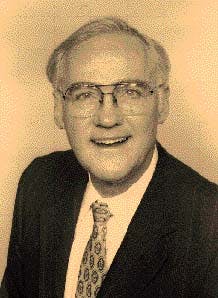
Robert Stewart
President
National Ocean Industries Association
Copyright 1997 Oil & Gas Journal. All Rights Reserved.