TGS launches seismic reprocessing projects offshore Canada and Norway
Why this news matters:
-
New imaging may help operators better assess drilling opportunities in the Orphan Basin as Newfoundland and Labrador seeks renewed exploration investment.
-
Advances in seismic processing are helping geoscientists evaluate areas previously obscured by volcanic rocks, potentially expanding the prospect inventory in the Norwegian Sea.
Projects at a glance
Orphan3D PSDM Phase 2
- Location: Orphan Basin, offshore Newfoundland and Labrador
- Coverage: ~13,300 sq km
- Target intervals: Jurassic and Cretaceous
- Technologies: FWI, PSDM, proprietary imaging workflows
- Final products expected: 2027
Atlantic Margin South Reprocessing
- Location: Norwegian Sea
- Coverage: >23,000 sq km
- Focus: Imaging beneath volcanic rocks
- Technologies: PSDM, ML-based de-noising, DM-eFWI
- Final volume expected: Q2 2027
TGS has started work on two more seismic data reprocessing projects offshore eastern Canada and mid-Norway, both supported by industry funding.
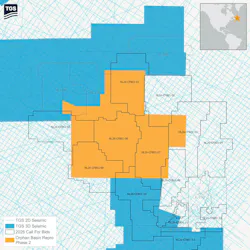
The Orphan3D PSDM Phase 2 reprocessing project offshore Newfoundland and Labrador will provide an uplift to about 13,300 sq km of 3D seismic data over the prospective Orphan Basin.
Main goals are to improve imaging quality and subsurface understanding to help exploration companies assess drilling opportunities within the basin. TGS will add the reprocessed data to its Newfoundland and Labrador data library.
The Orphan Basin is widely regarded as one of Atlantic Canada's most prospective frontier exploration areas, having attracted interest from operators such as ExxonMobil, Chevron, bp and Equinor in past licensing rounds. While exploration activity has slowed in recent years, regulators continue to promote the basin's potential as part of broader efforts to attract new offshore investment.
The basin is thought to contain significant undiscovered oil and gas resources and has been compared geologically with other productive North Atlantic margin plays, although much of the area remains lightly explored.
The project also comes as Newfoundland and Labrador authorities seek to improve the region's competitiveness for exploration. In 2024, the regulator C-NLOER launched a Call for Bids covering more than 10 million hectares in the Eastern Newfoundland region, including acreage associated with the Orphan Basin and neighboring exploration trends.
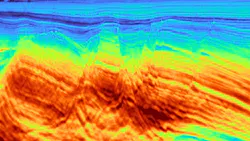
The depth imaging technologies deployed will include full waveform inversion (FWI) and proprietary imaging workflows, which TGS expects to enhance image clarity, structural definition and reservoir characterization.
The survey, which is targeting Cretaceous and Jurassic exploration intervals, should provide greater clarity across a range of structural and stratigraphic play types, the company added.
Those intervals host many of the source and reservoir rocks that underpin exploration plays across the broader North Atlantic margin.
TGS will release early products followed by final migrated volumes over the course of next year.
The project also aligns with efforts by Newfoundland and Labrador officials to keep the offshore sector competitive for future licensing rounds and exploration investment.
"Continued investment in geoscience data is essential to advancing understanding of the Newfoundland and Labrador offshore and maintaining the region's position as a globally competitive exploration jurisdiction.”
—Jim Keating, CEO, Oil and Gas Corp. of Newfoundland and Labrador
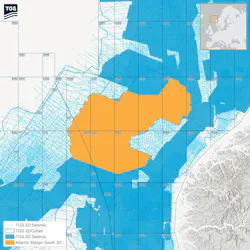
TGS has also embarked on its Atlantic Margin South Reprocessing project, covering an area of more than 23,000 sq km in the Norwegian Sea.
Parts of the Norwegian Sea remain underexplored because extensive volcanic rock sequences can distort seismic imaging, making it difficult to accurately map underlying reservoir structures.
The data will undergo a comprehensive pre-stack depth migration (PSDM) flow to address imaging issues related to intrusive and extrusive volcanic rocks. Tools deployed will include machine learning-based de-noising, adaptive de-multiple, and dynamic matching elastic FWI (DM-eFWI).
Early processed products should be made available later in the current quarter followed by the seamless full integrity volume available in second-quarter 2027.
About the Author
 Jeremy Beckman
Jeremy Beckman
Staff Writer / Editor, Europe
Jeremy Beckman has been Editor Europe, Offshore since 1992. Prior to joining Offshore he was a freelance journalist for eight years, working for a variety of electronics, computing and scientific journals in the UK. He regularly writes news columns on trends and events both in the NW Europe offshore region and globally. He also writes features on developments and technology in exploration and production.