New seismic initiatives by Viridien, TGS and Shearwater target complex offshore plays
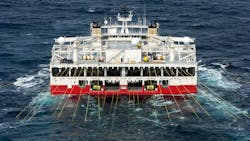
Viridien tackles subsurface complexities of three offshore Malaysia basins
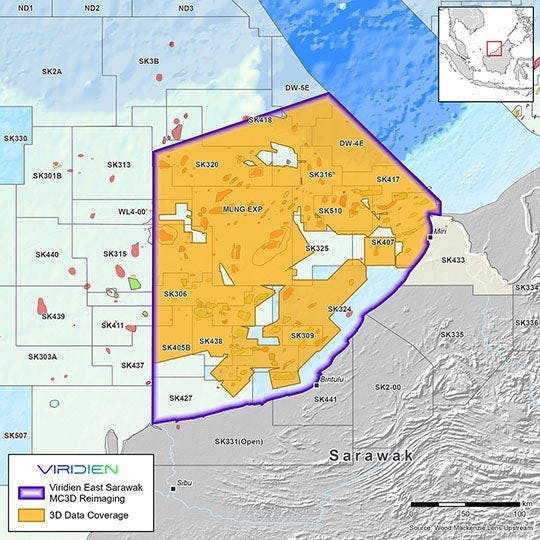
Viridien has started a new 3D seismic reimaging program over Malaysia’s offshore Balingian-Luconia-Baram basins.
This is a collaboration with Petronas via Malaysia Petroleum Management.
The plan is to re-image 44,000 sq km of legacy 3D seismic data, with a basin-wide post-stack merge to provide early data and insights for further reimaging.
Goals include enhanced imaging beneath complex carbonate sequences and resolution of velocity and attenuation issues across the region to open under-explored plays.
Dechun Lin, head of Earth Data at Viridien, said the company would draw on regional imaging experience and geological insights from its GeoVerse database.
“The project will deliver a clearer, more reliable subsurface picture, enabling higher-confidence interpretation and improved prospect identification,” Lin added.
TGS advancing studies of prospective but volcanic Vøring region off mid-Norway
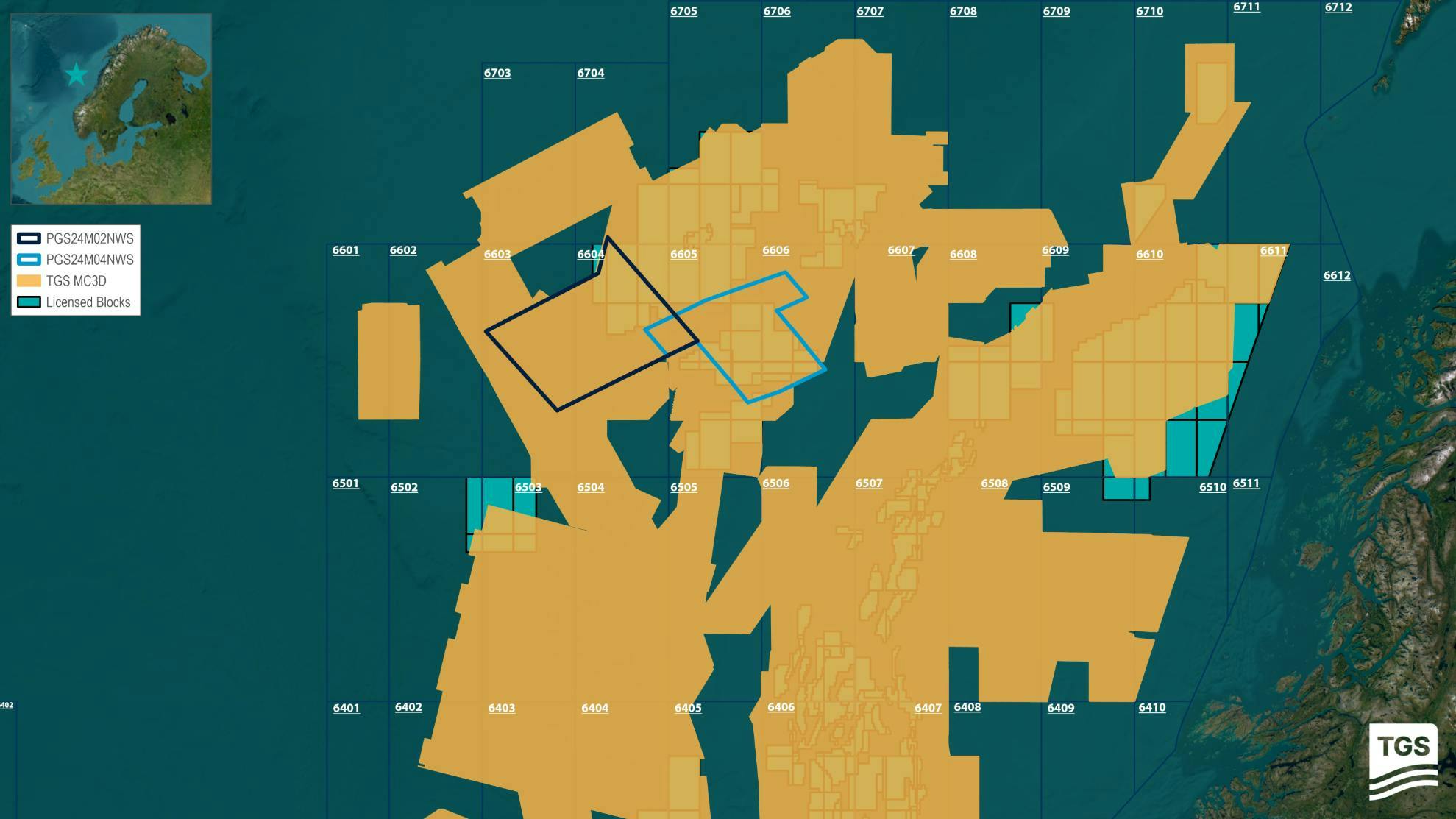
Offshore mid-Norway, TGS completed 3D seismic surveys PGS24M02NWS and PGS24M04NWS over the Vøring Basin last month.
The new data should improve subsurface understanding of the geologically complex volcanic region, the company said, and support more solid assessment of the exploration potential through use of modern acquisition and processing technologies.
Acquisition of the data took place using wide-tow triple sources to improve near-offset illumination; deep-tow multi-sensor GeoStreamer technology to enhance signal-to-noise ratio; and extended streamers said to have been optimized for full waveform inversion.
In addition, the team deployed broadband processing, including machine learning-based noise attenuation, to achieve improved imaging of deeper intrusive bodies and complex stratigraphy.
Exploration drilling on the Vøring Basin has been patchy. Discoveries include Obelix, Irpa, Balderbrå and Haydn/Monn, which have mainly delivered gas in Paleocene and Upper Cretaceous reservoirs. The Equinor-operated Aasta Hansteen is the sole producing field, with Irpa currently under development.
Attempts to prove Lower Cretaceous and Jurassic targets have so far failed, TGS added, due largely to the complexities of imaging beneath volcanic and intrusive sequences.
According to the company, a major Paleocene to Early Eocene magmatic episode led to widespread intrusions and the emergence of hydrothermal vent complexes that have impacted reservoir architecture, maturation and fluid migration across the basin.
However, recent advances in seismic acquisition and imaging along the Atlantic Margin have improved capabilities for resolving these features and assessing their role within the petroleum system.
Shearwater Geo acquiring 3D data offshore Western Niger Delta
Shearwater Geoservices is working on a new multi-client seismic acquisition program over Nigeria’s Western Niger Delta Basin.
The SW Duchess vessel was due to start acquiring 3D data for the two-month survey at the end of December. Shearwater is operating in partnership with Harvex Geosolutions and the Nigerian Upstream Petroleum Regulatory Commission (NUPRC).
Results should support future exploration decisions and license rounds in the region, the company added.
TGS opens Malaysia imaging center
TGS has opened a new imaging center in Kuala Lumpur, Malaysia, which will provide services both locally and to support the company’s multi-client projects across the wider Asia-Pacific region.
The center follows the setup for the company’s Advanced Capabilities Centers for Petrobras in Brazil, where TGS says it has helped local geoscientists speed up delivery of projects.
TGS’ established imaging teams will assist the Kuala Lumpur facility during its first year of operation. It will draw on cloud-based infrastructure hosted in Malaysia.
About the Author
 Jeremy Beckman
Jeremy Beckman
Staff Writer / Editor, Europe
Jeremy Beckman has been Editor Europe, Offshore since 1992. Prior to joining Offshore he was a freelance journalist for eight years, working for a variety of electronics, computing and scientific journals in the UK. He regularly writes news columns on trends and events both in the NW Europe offshore region and globally. He also writes features on developments and technology in exploration and production.
Related
