Woodside evaluating second-phase Sangomar oil expansion offshore Senegal
Why this news matters:
-
Strong reservoir performance at Sangomar is providing Woodside and Senegal with an opportunity to evaluate additional resource development beyond the project's original scope.
-
A Phase 2 expansion would reinforce Senegal's position as an emerging offshore producer and could extend the field's production profile for years.
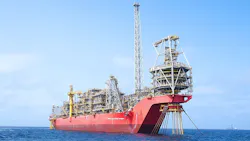
Production performance from the deepwater Sangomar oil field offshore Senegal remains strong, notably in the lower S500 reservoirs, supporting operator Woodside Energy's evaluation of a potential Phase 2 development.
The company is now in talks with state-owned oil company Petrosen and the Senegalese government regarding the possibility of a Phase 2 development targeting the upper S400 reservoirs.
Sangomar was Senegal's first offshore oil development and a major milestone in the country's emergence as an oil producer. A second development phase could unlock additional reserves while helping sustain production levels and extend the field's economic life.
In its recent quarterly results statement, Woodside Energy attributed the extension of initial plateau production to stronger-than-anticipated aquifer pressure support and well/network optimization. The combination has helped sustain reservoir performance, improving recovery potential and delaying natural production decline.
North West Shelf and Pluto
As for Woodside’s core E&P activities offshore Australia, the North West Shelf partners have approved a rig contract for the Greater Western Flank Phase 4 project. Drilling should start in second-quarter 2027, with startup targeted in 2028.
Planning has begun for the remediation of a defect in the subsea mooring system for the Okha FPSO in the Carnarvon Basin, also part of the North West Shelf project. The vessel recently underwent scheduled shipyard activities.
Work is also in progress concerning the P&A of five North West Shelf subsea gas wells.
Later this year, the offshore XNA-03 infill well for the Pluto LNG project should start production.
Western Australia developments
The same applies to the Julimar Development Phase 3 project offshore Western Australia. Concurrently, decommissioning of three Julimar-Brunello exploration wells is underway, with completion of condition precedent for the agreed asset swap for the fields with Chevron, now expected to go through during the fourth quarter.
Earlier in 2026, oil production at Woodside’s Pyrenees FPSO was impacted by damage arising from the tropical cyclone Narelle. The FPSO has since been reconnected and production partially resumed, although assessment continues ahead of a return to full production.
Bass Strait operations
In the Bass Strait offshore southeast Australia, Woodside completed planned shutdowns of the Marlin A and Marlin B platforms, and the five-well drilling program concluded for the Turrum Phase 3 Project.
All the wells will now undergo completion work, with startup targeted for the first half of 2027.
As for ongoing P&A activities at the Gippsland Basin Joint Venture fields in the same region, the West Kingfish and Cobia platform wells have been plugged, and platform rig operations have started on the Halibut and Tuna platforms.
West Africa growth opportunities
Offshore West Africa, Woodside has entered a non-binding memorandum of understanding with Angola’s Agência Nacional de Petróleo, Gás e Biocombustíveis to assess three blocks in the offshore Benguela and Namibe basins offshore Angola.
To the north, the company has exited the Marine XX license offshore Republic of Congo.
About the Author
 Jeremy Beckman
Jeremy Beckman
Staff Writer / Editor, Europe
Jeremy Beckman has been Editor Europe, Offshore since 1992. Prior to joining Offshore he was a freelance journalist for eight years, working for a variety of electronics, computing and scientific journals in the UK. He regularly writes news columns on trends and events both in the NW Europe offshore region and globally. He also writes features on developments and technology in exploration and production.