ExxonMobil achieves milestone automated well placement offshore Guyana
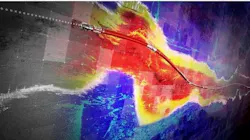
In a significant leap forward for digital well construction, ExxonMobil, in collaboration with Halliburton, Sekal, Noble, and the Wells Alliance Guyana team, has completed the industry’s first fully closed-loop automated geological well placement with complete rig automation in the Stabroek Block offshore Guyana.
Announced in March 2026, this milestone marks a pivotal advancement in the ongoing transformation of drilling operations toward greater autonomy, efficiency, and safety.
The breakthrough integrated Halliburton’s LOGIX orchestration platform and automated geosteering capabilities with its EarthStar ultra-deep resistivity service and Sekal’s DrillTronics rig automation system. This created a seamless closed-loop workflow that simultaneously handles real-time subsurface interpretation, geosteering decisions, drilling parameter optimization, hydraulics management, and rig control.
For the first time in an offshore environment, the system autonomously steered the wellbore within tight reservoir boundaries while optimizing operations end-to-end — eliminating the traditional handoff between geologists interpreting data and drillers executing commands. No driller intervention was required on the controls during the reservoir section. Early results highlighted faster drilling rates, superior reservoir contact, and significantly reduced tripping times.
Broader industry momentum
This achievement builds on years of steady progress in drilling automation. From mechanized pipe handling and auto-drillers in the 2010s to today’s AI-driven closed-loop systems, the sector is rapidly evolving. Notable prior steps include SLB and Equinor’s 2024 deployment of 99% autonomous drilling over a 2.6 km section offshore Brazil (with 60% higher rate of penetration) and Halliburton-Sekal’s 2025 automated on-bottom drilling system for Equinor in the North Sea.
Market analysts project strong growth: the drilling automation segment, valued at approximately USD 4.4–8.5 billion in recent years, is expected to expand at CAGRs of 6–8% through the early 2030s, driven by demands for cost reduction, safety improvements, and operational consistency — particularly in complex offshore and deepwater environments.
Benefits and outlook
Automation delivers measurable gains: higher rates of penetration, reduced non-productive time, enhanced well placement accuracy, and fewer personnel in hazardous rig-floor “red zones.” For operators like ExxonMobil in world-class assets such as Guyana, these technologies translate into faster project cycles, lower costs per barrel, and improved recovery. As the industry moves toward scalable “well factories,” digital twins, remote operations centers, and full autonomy, milestones like the Guyana well demonstrate that closed-loop systems are no longer experimental — they are becoming repeatable standards. This progress positions forward-thinking operators and service companies to deliver more resilient, efficient, and sustainable energy production in an increasingly challenging environment.
About the Author
 Bruce Beaubouef
Bruce Beaubouef
Senior Lead Reporter / Managing Editor
Bruce Beaubouef is Managing Editor for Offshore magazine. In that capacity, he plans and oversees content for the magazine; writes features on technologies and trends for the magazine; writes news updates for the website; creates and moderates topical webinars; and creates videos that focus on offshore oil and gas and renewable energies. Beaubouef has been in the oil and gas trade media for 25 years, starting out as Editor of Hart’s Pipeline Digest in 1998. From there, he went on to serve as Associate Editor for Pipe Line and Gas Industry for Gulf Publishing for four years before rejoining Hart Publications as Editor of PipeLine and Gas Technology in 2003. He joined Offshore magazine as Managing Editor in 2010, at that time owned by PennWell Corp. Beaubouef earned his Ph.D. at the University of Houston in 1997, and his dissertation was published in book form by Texas A&M University Press in September 2007 as The Strategic Petroleum Reserve: U.S. Energy Security and Oil Politics, 1975-2005.
Related
