Equinor, Wellesley jointly seeking to ramp up HP/HT drilling offshore Norway
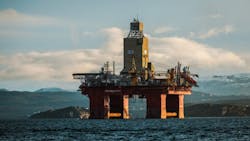
Equinor and Wellesley Petroleum have planned a joint exploration project designed to increase high-pressure, high-temperature (HP/HT) exploration activity offshore Norway.
One of their main goals is to find new reserves to sustain longer-term output from declining production hubs on the Norwegian Continental Shelf (NCS).
The joint project, due to start this year, will combine Equinor’s regional knowledge, subsurface strengths and infrastructure with Wellesley’s exploration model, with the company claiming proven capability as an HP/HT drilling operator.
They hope this will lead to increased exploration activity, delivering a better-quality pool of prospects, and a faster time from exploration drilling to first production.
Selected core areas of the northern Norwegian North Sea will be the focus, Wellesley reported, in regions with strong resource potential from under-explored, deeper-lying targets.
The companies aim to mature prospects more efficiently through combining their respective datasets, interpretations and technical strengths, prioritizing the strongest drilling opportunities.
It could lead to drilling of up to 15 exploration wells during 2027-2030. Wellesley targets operating up to three to five HP/HT wells per year on licenses where the duo are already partners.
This is not a joint venture, partnership or new legal entity, the company said, with each party expecting to retain full independence and continuing to act within existing license structures. Also, any drilling decisions would remain subject to approvals from the other licensees.
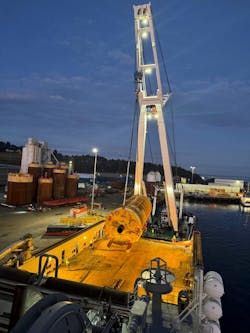
First NCS CanDuctor deployment from anchor-handling vessel
Wellesley also revealed it would shortly start a new two-well operated drilling campaign in PL 1148. The Deepsea Yantai semisubmersible rig will drill the Carmen prospect in PL 1148, followed by appraisal of the Afrodite discovery in PL 293.
In preparation for the Carmen program, Elemental Energies subsidiary Well Expertise AS has deployed a Neodrill CanDuctor from an anchor-handling vessel, reportedly a first offshore Norway.
This approach, rather than drilling and cementing a conductor using the drilling rig, cuts operational risks and is more cost-effcicient, Wellesley said.
About the Author
 Jeremy Beckman
Jeremy Beckman
Staff Writer / Editor, Europe
Jeremy Beckman has been Editor Europe, Offshore since 1992. Prior to joining Offshore he was a freelance journalist for eight years, working for a variety of electronics, computing and scientific journals in the UK. He regularly writes news columns on trends and events both in the NW Europe offshore region and globally. He also writes features on developments and technology in exploration and production.