DRILLING & PRODUCTION
Multiple application reinjection system
Shell UK Ltd. has installed the first of three subsea MARS (Multiple Application Reinjection System) interfaces on its Bittern field in the North Sea. The system has been described as a “USB port for wellheads” and is being adopted by Shell as part of its enhanced oil recovery (EOR) strategy for the region.
Following successful commissioning, Shell now can complete reservoir stimulation/scale squeeze operations from an ROV without a MODU or diving support vessel. The patented MARS system, a Cameron technology, is supplied by DES Operations of Aberdeen. “Until now operators have been using MARS for multiphase pumping and metering operations but this is a world first for reservoir stimulation,” says Ian Donald, managing director of DES. “For Shell, MARS offers safer, faster, and cheaper operations, with options to extend the functionality for further subsea processing operations.”
The remaining two MARS systems are due for installation later this year. When installed, Shell will be able to undertake multiple well stimulation campaigns from a single ROV.
“We approached DES two years ago to see if the technology could be adapted for our scale squeeze operations, and have worked with DES since then to this successful conclusion,” says John Anthony, Shell project manager.
In addition to using the system in the Bittern field, MARS also has been used by BP on the King field in the Gulf of Mexico and has been selected by Total for use in subsea multiphase metering in West Africa. The MARS technology has received several industry awards.
Deploying density imaging system
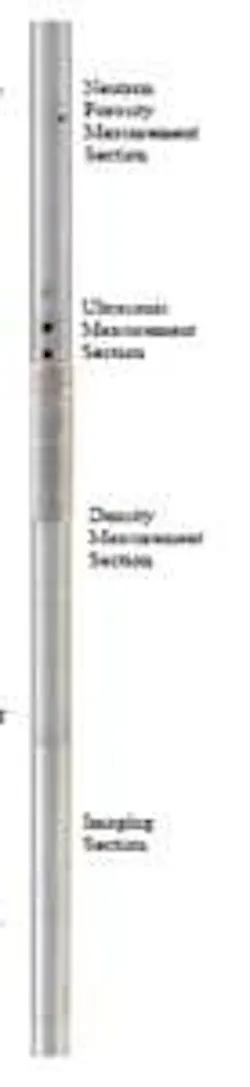
PathFinder Energy Services iFinder density imaging system, which produces borehole images of bulk density, photoelectric index, and ultrasonic standoff, has been tested and deployed.
The primary measurement of the iFinder is bulk density imaging. Bulk density images are a graphical representation of the variation in bulk density around the circumference of the borehole. Imaging this is possible using the collimated source and detectors of the density tool which focus the density measurement on the formation directly in front of the sensor. As the tool rotates, data is collected around the entire borehole. The bulk density measurement uses a patented stand-off weighting technique to select a subset of the rotating data with minimum stand-off.
Similarly, iFinder’s patented imaging algorithm uses weighting to focus the density measurement on discreet azimuths, or sectors, around the borehole. Since the algorithm does not “bin” data, there is no technical limit to the number of azimuths. However, the practical limit derived from the azimuthal resolution of the detectors is 32 sectors for memory images, while images of up to 16 sectors can be transmitted uphole in real time.
Density images mainly are used for geosteering because of the ability to determine the direction from which a particular bed is entered or exited. Stand-off or caliper images become important in geomechanics and wellbore stability analysis. The borehole image of the photoelectric index may provide useful additional geological information.
Landmark launches E&P software
Landmark has launched R5000, a software release including upgrades to more than 70 systems spanning all disciplines within the E&P lifecycle. The launch offers oil and gas operators levels of integration, the ability to customize workflows, and the opportunity to make more informed field development decisions, Landmark says.
“The R5000 release is a catalyst for the industry to help increase productivity and collaboration across disciplines. We listened to the industry when creating these technology solutions, ensuring that they directly address the complex challenges exploration and production companies face,” says Chris Usher, Landmark’s senior director of technology. “Many have already begun integrating the R5000 solutions and empowering their employees to work more efficiently and effectively from insight to execution.”
This synchronous software gives:
- An open environment for innovation to enable cohesive workflows, with new features including drag-and-drop functionality and enhanced common viewing for any application
- Simplified data management and documented asset insight through new knowledge capture capabilities so operators can create an audit trail of decision-making while preserving crucial information plus addressing rampant data duplication issues and enabling faster project start up
- Integration of 2D and 3D seismic data at the data model to power the high-science workflows, such as pre-stack interpretation on the desktop that today’s more complex assets require
- Upgrades to its geosciences applications, including new features to increase user productivity when exploring frontier basins and mature fields
- New release for 3D multi-volume interpretation and visualization opens access to 2D data directly providing a perspective on an area of interest by quickly defining the connections and continuity between multiple survey lines
- Monitoring of drilling volumes and complex downhole equipment with fewer experienced personnel using upgrades to software has made morning reporting quicker and easier
- Improving mitigation of uncertainty, incorporating risk factors and using business objectives to plan field development workflow
- A comprehensive software program to support data management and infrastructure applications to provide a springboard to construct operator workflows and technology solutions.
“In upgrading Landmark applications in all E&P disciplines to a common technology platform, we also are providing an enabling framework for the Digital Asset – a collaborative Halliburton offering which allows operators to model, measure, and optimize an asset,” Usher says. “These new applications empower the industry to connect people, technology, and processes for more efficient decision making.”
Jackup rig kits
LeTourneau Technologies Offshore Products is responding to high market demand for completed jackup rigs that often require more than a two-year lead time through the development of the rig kit and license packages. This component packaging concept allows operators to build a LeTourneau jackup at a shipyard of choice.
The company’s rig kits include critical components such as the leg and guide, jacking system, cantilever system, pedestal king post cranes, and optional anchor winches; in addition to detailed design drawings for accurate fabrication. Additionally, LeTourneau’s engineering support team will assist operators through construction and provide service throughout the life of the rig.
LTI Offshore Products designed and fabricated the world’s first jackup drilling rig in 1955, and has since built around 200 jackups over a half-century.