Executive Q&A: Why US offshore investment still matters for energy security
Key takeaways from Adam Ferrari:
- US offshore production in the Gulf of Mexico offers a stable, long-duration supply that bolsters national energy security and reduces dependence on imports from unstable regions.
- Long-term offshore projects, once capitalized, continue producing regardless of short-term market fluctuations, providing a buffer against global supply shocks.
- Operational excellence, technological improvements, and regulatory stability are key to maintaining US offshore competitiveness in a global market.
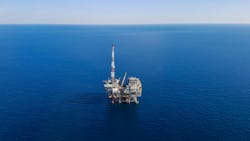
With nearly two decades of experience spanning offshore operations, investment banking and entrepreneurial ventures, Adam Ferrari brings a cross‑disciplinary perspective to the offshore energy market.
In this exclusive Q&A, the Phoenix Energy CEO discusses the value of US offshore production, the economics of deepwater investment, and the technologies and practices shaping safety, emissions performance and long‑term competitiveness. As global energy markets remain exposed to geopolitical disruption, he also explains how the Gulf of Mexico continues to provide long‑duration, capital‑intensive supply under a stable regulatory framework.
Ferrari began his career with BP America in the Gulf of Mexico before spending time in investment banking at Macquarie Capital. He later returned to the operating side with then‑startup Halcón Resources Corp., and subsequently pursued entrepreneurial opportunities in mineral acquisitions, an experience that ultimately led him to Phoenix Energy.
Offshore spoke with Ferrari about why US deepwater projects remain competitive, how operational discipline and regulatory clarity underpin long‑term value, and his perspective on the evolving offshore energy landscape.
Offshore: How does sustained investment in US offshore oil and gas, particularly in the Gulf of Mexico, strengthen national energy security compared with reliance on imported offshore crude from geopolitically sensitive regions?

Ferrari: If we don’t produce the barrel here, we’re going to import it from somewhere else. The United States is one of the safest countries to produce oil. When you drill offshore in the Gulf of Mexico, you’re operating under US rule of law. Contracts are honored and regulations are clear. That matters when you’re deploying billions of dollars into long-cycle projects.
Deepwater isn’t fast, but once it’s built, it produces meaningful volumes for decades. Those projects add long-duration supply to a system that also relies heavily on shorter-cycle shale development.
In the US, we consume almost as much oil today as at any time in our history. So every barrel produced in US waters is one less barrel sourced from a region that may not be stable in the future, and recent events have reminded us how quickly global supply can be disrupted.
 Offshore and OGJ coverage on the conflict in the Middle East
Offshore: Offshore energy projects involve long investment cycles and high capital intensity. How do stable domestic offshore operations help buffer the US against global supply shocks and price volatility tied to geopolitical events?
Ferrari: Deepwater is expensive, and no one disputes that. But once you have committed the capital and put steel in the water, those barrels do not shut down because of short-term market volatility. The upfront investment is already made, and the lifting costs are competitive. So production continues.
That matters when instability in major producing regions tightens global oil supply.
If the US is overly dependent on imported crude when there is a disruption in the Middle East or West Africa, prices can move quickly. But if you have meaningful domestic offshore production online, that becomes a supply anchor. It does not eliminate volatility because oil is a global commodity, but it reduces the severity of the shock.
Offshore: Looking ahead, how should US offshore energy operators position themselves, both technically and operationally, to remain competitive as global offshore developments expand in regions like Brazil, West Africa and the Eastern Mediterranean?
Ferrari: These projects are measured in billions of dollars and decades. If you are going to compete globally, you have to underwrite conservatively and hit your numbers. You cannot assume high prices forever. These projects have to work across cycles.
Stability matters when you are committing long-term capital, and you need regulatory clarity. If the rules and conditions are constantly changing, capital will go somewhere else. In the US, with offshore drilling, you generally know what the rules are, and they do not change overnight. That is a competitive advantage.
There is no question that Brazil and West Africa have opportunities. But since American operators have their own advantages, US offshore barrels will remain among the most attractive in the world.
Offshore: Which specific technologies or operational practices are proving most effective at reducing environmental risk, lowering emissions or improving safety performance in offshore development today?
Ferrari: This is a complex business, and it always has been. But the industry today is very different from what it was 15 or 20 years ago. The industry faced serious challenges, and engineering standards today are significantly higher as a result.
Today, you are seeing things like better well design, stronger casing programs, real-time downhole data and stronger well control systems. There is far more monitoring than there used to be. Also, all around, problems are identified earlier and managed earlier.
On the emissions side, operators focus on improving fuel efficiency on platforms and tightening leak detection. A lot of it is not flashy technology. It is better execution and tighter operational discipline.
At the end of the day, safety and environmental performance are engineering problems, and American engineers are very good at solving engineering problems.
Offshore: Lastly, what role does the offshore energy sector play in sustaining high‑skill jobs, regional service networks and coastal economies, and how does this differ from onshore energy development?
Ferrari: The oil and gas industry supports a wide range of skilled jobs. Whether offshore or onshore, these are high-accountability roles focused on building and maintaining real infrastructure.
Offshore development involves a particularly specialized workforce, including subsea engineers, drilling crews and marine operators. Offshore safety teams also play a role. Those operations require specialized infrastructure, and the economic activity tends to cluster along the Gulf Coast. When offshore development is active, ports see more traffic and service companies across coastal communities benefit.
Onshore development looks different. In shale basins like the Bakken, drilling supports rig crews, completion teams, trucking fleets and local service businesses. These projects are faster to deploy and more flexible, which is one reason onshore shale has driven much of the growth in US oil production over the past decade.
Both models serve different roles. Offshore projects deliver long-life production and support coastal industrial networks. Onshore shale provides flexibility and scale. Together, they make up an important part of the American energy system.
Energy development is about building and operating physical infrastructure. It supports blue-collar and technical careers that remain essential to domestic production and regional economies.
Editor's note: The views and opinions expressed in this article are solely those of Adam Ferrari and do not necessarily reflect the views of his employer or any affiliated organizations, including Phoenix Energy One LLC. The information contained in this article is meant for general informational purposes only. Any reliance on the information contained herein is done at the users own risk.
About the Author
 Ariana Hurtado
Ariana Hurtado
Editor-in-Chief
With more than a decade of copy editing, project management and journalism experience, Ariana Hurtado is a seasoned managing editor born and raised in the energy capital of the world—Houston, Texas. She currently serves as editor-in-chief of Offshore, overseeing the editorial team, its content and the brand's growth from a digital perspective.
Utilizing her editorial expertise, she manages digital media for the Offshore team. She also helps create and oversee new special industry reports and revolutionizes existing supplements, while also contributing content to Offshore's magazine, newsletters and website as a copy editor and writer.
Prior to her current role, she served as Offshore's editor and director of special reports from April 2022 to December 2024. Before joining Offshore, she served as senior managing editor of publications with Hart Energy. Prior to her nearly nine years with Hart, she worked on the copy desk as a news editor at the Houston Chronicle.
She graduated magna cum laude with a bachelor's degree in journalism from the University of Houston.
Related
