Clariant achieves North Sea breakthrough with low-dosage hydrate inhibitor
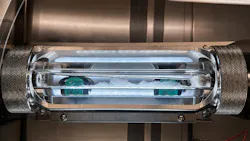
Clariant Oil Services has announced the successful offshore deployment of HYTREAT ECO, an anti-agglomerant low dosage hydrate inhibitor (LDHI-AA) technology.
Clariant says the inhibitor satisfies both the performance demands of hydrate management and OSPAR’s stringent North Sea environmental requirements. OSPAR is the international framework for protecting the marine environment of the North-East Atlantic offshore regions.
Now having been deployed in fields offshore Norway and the United Kingdom, the technology is said to represent a significant advancement in flow assurance, enabling operators to reduce chemical consumption while maintaining reliable hydrate control in some of the world’ most demanding environments.
Gas hydrate formation remains one of the most technically and operationally challenging flow assurance issues in subsea oil and gas production. Under high-pressure, low-temperature conditions, hydrates can form ice-like blockages that threaten production and asset integrity.
Operators in the North Sea have traditionally relied on large volumes of methanol or monoethylene glycol (MEG) to prevent hydrate formation, creating significant logistical and environmental burdens.
Clariant says that the LDHI-AA technology keeps hydrate particles dispersed and flowing through production systems, delivering reliable flow assurance at dosage rates that, in the North Sea field trials, ranged from less than 1% to 2% by volume on water, an order of magnitude lower than conventional methanol or MEG treatment programs.
The result, Clariant says, is reduced chemical consumption, lower offshore logistics requirements, and a smaller operational footprint.
Fully compliant with OSPAR – the international framework for protecting the marine environment of the North-East Atlantic – and stringent North Sea environmental requirements, Clariant says that HYTREAT ECO is the first low-dosage hydrate management solution to achieve this level of environmental acceptance.
In Norway, HYTREAT ECO supported hydrate management in a mature offshore asset, helping operators manage increasing water production while reducing reliance on glycol regeneration capacity. During the trial, the technology enabled a successful well restart following a 24-hour shut-in entirely within the hydrate stability zone, one of the most demanding operational scenarios in subsea production, with produced water quality confirmed to meet overboard discharge limits throughout. On the strength of this field performance, HYTREAT ECO was awarded a Technology Readiness Level of TRL7 on the internationally recognized 9-point TRL scale, the industry benchmark confirming field-proven performance under full-scale commercial conditions.
In the United Kingdom, the technology replaced subsea methanol injection in a gas condensate field operating under extreme subcooling conditions. Shut-in subcooling in the riser reached up to 25°C at pressures of 130 barg, among the most severe offshore conditions recorded for any LDHI field deployment. Clariant says that the HYTREAT ECO delivered effective hydrate control during both normal operations and cold restart scenarios in this deployment.
About the Author
 Bruce Beaubouef
Bruce Beaubouef
Senior Lead Reporter / Managing Editor
Bruce Beaubouef is Managing Editor for Offshore magazine. In that capacity, he plans and oversees content for the magazine; writes features on technologies and trends for the magazine; writes news updates for the website; creates and moderates topical webinars; and creates videos that focus on offshore oil and gas and renewable energies. Beaubouef has been in the oil and gas trade media for 25 years, starting out as Editor of Hart’s Pipeline Digest in 1998. From there, he went on to serve as Associate Editor for Pipe Line and Gas Industry for Gulf Publishing for four years before rejoining Hart Publications as Editor of PipeLine and Gas Technology in 2003. He joined Offshore magazine as Managing Editor in 2010, at that time owned by PennWell Corp. Beaubouef earned his Ph.D. at the University of Houston in 1997, and his dissertation was published in book form by Texas A&M University Press in September 2007 as The Strategic Petroleum Reserve: U.S. Energy Security and Oil Politics, 1975-2005.
Related
