Aker BP enters next stage of downhole pilot testing of HIPlog at Alvheim Field
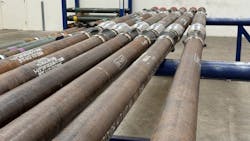
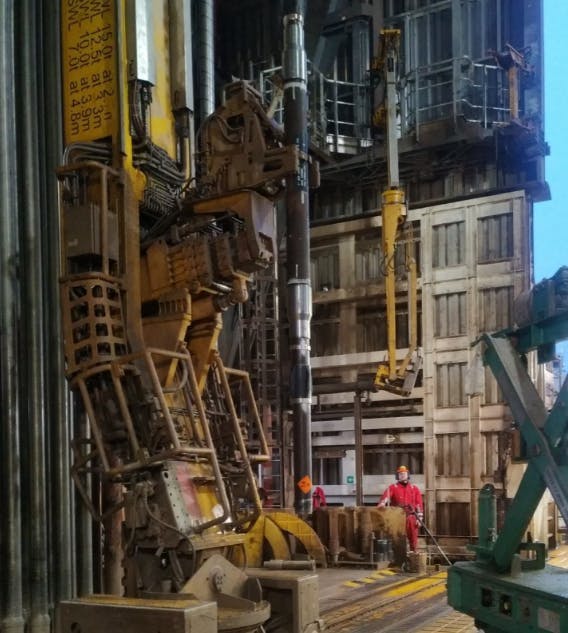
Aker BP is piloting new wireless well technology to measure production at the Alvheim Field in the Norwegian North Sea.
HIPlog can perform this task in the well without the need to halt production or additional well operations.
The goal is to derive improved insight into what is actually happening downhole, said Alvheim advanced reservoir engineer Morten Hausken. “With HIPlog, we obtain measurements that have previously been difficult or impossible to collect, especially in multilateral wells,” he added.
The system, which measures how oil and gas flow in different parts of a well, operates as follows:
- Initially, small heat sources are installed for permanent use in the well; and
- The sources send controlled heat signals into the flow, with already in-place temperature sensors registering the signals.
Engineers can then use the data to calculate production flow from each branch and zone, gaining a better picture of how production is distributed.
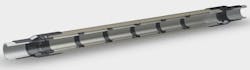
HIPlog is designed to help clarify which branches are the most productive, how production varies over time and whether certain zones are delivering lower volumes than expected.
Results can support improved well management, more targeted actions at the right time and improved recovery during the well’s lifetime.
“It is the result of several years of systematic technology development and qualification,” said Yngve Johansen, subsurface R&D manager at the company. Over the past few years, Aker BP’s team working on the Edvard Grieg in the North Sea, in collaboration with a joint industry project group, undertook much of the early technology development.
The offshore pilot has taken place in the Frosk Attic 24/9-M-7 well, with nine HIPlog stations installed in each of the well’s three branches.
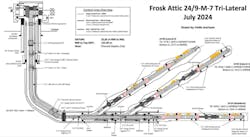
The first measurement campaign last November is said to have provided clear and measurable signals concerning production contributions from all three branches; good measurement quality in two of the branches; and more uncertainty in one branch, connected to well geometry and low rates.
“Among other things, we see how sensitive the setup is to low rates and distance between measurement points,” Hausken commented.
Aker BP plans repeated measurements using the HIPlog installations for several more years to gain a more reliable comparison picture. A next round of measurements is planned this month.
It is important to remember that this is early in the well’s life. As we obtain more measurements over time, the data foundation will continuously improve,” Hausken added.
Experience from Alvheim should also support planning for future wells.