OTC 2026: Offshore operators push digital tools from pilots to day‑to‑day decision support
Key highlights:
- Operators are moving from reactive alarm systems to predictive models that enable proactive maintenance and decision-making.
- Shape Digital emphasizes AI as a decision support tool that provides context and confidence levels, rather than automated directives, to build trust among offshore teams.
- Focus areas include rotating equipment, power generation and safety systems, where data quality supports advanced analytics and operational improvements.
By Ariana Hurtado, Editor-in-Chief
Across offshore oil and gas operations, data availability is no longer the limiting factor. Instead, operators are grappling with how to convert large volumes of operational and engineering data into decisions that reduce downtime, improve reliability and lower energy intensity without adding complexity or risk to already constrained systems.
That challenge is visible on deepwater floating assets, where highly integrated production systems, limited access for intervention and tight operating margins leave little room for trial and error.

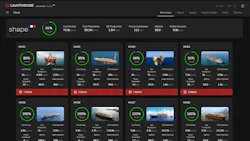
According to Felipe Baldissera, CEO of Shape Digital (a spin-off of MODEC), many offshore facilities still rely heavily on alarms and fixed thresholds to guide decisions, even as data volumes continue to grow.
“Despite large volumes of data, most decisions are still based on alarms and thresholds rather than predictive models,” Baldissera told Offshore. “That creates a reactive environment instead of a preventive one.”
Operational realities driving digital adoption
Baldissera said these constraints were evident during his earlier experience supporting FPSO operations, where unplanned downtime and inefficient equipment operation can cascade across an entire production system. In that environment, early fault detection and clearer context around equipment behavior become critical.
Rather than approaching artificial intelligence (AI) as an automation layer, Shape Digital has focused on applying AI as decision support that accounts for known engineering and operational constraints. Baldissera described this as an effort to avoid “black box” outputs that operators are hesitant to trust in offshore settings.
“These assets operate with high complexity and very high costs of intervention,” he continued. “If a system doesn’t explain why it is flagging an issue, it’s unlikely to be acted on.”
Predictive maintenance, energy efficiency and safety
Much of the near‑term digital focus offshore has centered on rotating equipment, power generation and compression systems—areas where data quality and failure history support more advanced analytics. Baldissera said predictive maintenance initiatives have proven particularly effective when paired with existing reliability workflows.
Early deployments, he noted, suggest reductions in unplanned downtime where condition monitoring data is already mature, with the most consistent improvements seen in critical rotating equipment. Energy management has also emerged as a key application, especially as operators look for emissions reductions that do not require new capital projects.
“Gas compression and power generation are areas where small efficiency gains translate into measurable fuel and emissions reductions,” Baldissera said. “Those improvements come from operating existing systems better, not replacing them.”
Bridging cultural and organizational gaps
While digital tools continue to mature, Baldissera said adoption challenges are often cultural rather than technical. Offshore teams remain cautious about systems that appear to replace human judgment or introduce additional operational risk.
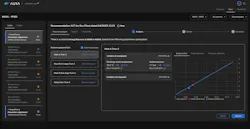
To address that, Shape Digital’s applications are positioned as advisory tools that provide confidence levels and operating context, rather than automated directives. According to Baldissera, that approach aligns better with offshore decision‑making processes and helps build trust over time.
“AI outputs are used to support decisions, not to override them,” he added. “Operators remain in control.”
Lessons from Brazil, implications for mature basins
Shape Digital was founded five years ago in Brazil, where the company already has established contracts with Petrobras, Shell, Prio and others.
The company’s work in Brazil has been shaped by the country’s heavy reliance on FPSOs and large‑scale deepwater developments. Baldissera said those assets provide a useful testing ground for digital approaches that must account for tightly coupled subsurface, topsides and utilities systems.
In contrast, more mature offshore regions such as the US Gulf of Mexico tend to approach digital projects with a narrower scope, prioritizing reliability, uptime and asset life extension over broader optimization.
“In mature basins, digital initiatives are more incremental and tightly linked to return on investment,” Baldissera said. “There’s less tolerance for experimentation.”
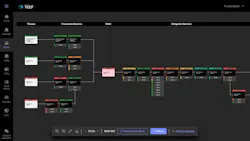
Last August, Shell Brasil, MODEC Brasil, Shape Digital and Unicamp launched a 36-month R&D initiative to enhance offshore safety using AI. The project will incorporate Shape Reef, Shape Digital’s process safety tool, to detect degradation in safety barriers and gas leak risks in real time.
Industry push toward integrated decision frameworks
That focus on integration was reflected recently in a strategic collaboration between Shape Digital and Halliburton, aimed at connecting subsurface models with surface‑level operational intelligence. The agreement aligns with broader industry efforts to reduce disconnects between planning, execution and real‑time operations.
As offshore operators continue to balance cost pressures, emissions targets and aging infrastructure, the shift from digital pilots to embedded decision support remains an ongoing challenge. Whether AI‑enabled tools can move from niche applications to standard offshore practice will depend less on algorithms, Baldissera suggested, and more on how well they fit operational reality.
Offshore is an official media partner of the 2026 Offshore Technology Conference (OTC).
This morning Shape Digital's VP of Customer Success Caio Sene da Silva was one of the panelist of OTC's "Digital Seas: How AI and Emerging Technologies are Shaping the Future of Offshore Technology" young profcessional event.
Moreover, at 10:10 a.m. on Thursday, May 7, in room 312, Product Manager Manoela Boff will present the “Bridging the Gap of Smart Asset Management” paper, sharing real-world insights from a five-year journey across FPSOs, including tangible results in performance gains and decision-making.
Shape Digital is exhibiting at OTC booth 4131 in the Brazilian Pavilion.
 OTC 2026 Opening Ceremony
About the Author
 Ariana Hurtado
Ariana Hurtado
Editor-in-Chief
With more than a decade of copy editing, project management and journalism experience, Ariana Hurtado is a seasoned managing editor born and raised in the energy capital of the world—Houston, Texas. She currently serves as editor-in-chief of Offshore, overseeing the editorial team, its content and the brand's growth from a digital perspective.
Utilizing her editorial expertise, she manages digital media for the Offshore team. She also helps create and oversee new special industry reports and revolutionizes existing supplements, while also contributing content to Offshore's magazine, newsletters and website as a copy editor and writer.
Prior to her current role, she served as Offshore's editor and director of special reports from April 2022 to December 2024. Before joining Offshore, she served as senior managing editor of publications with Hart Energy. Prior to her nearly nine years with Hart, she worked on the copy desk as a news editor at the Houston Chronicle.
She graduated magna cum laude with a bachelor's degree in journalism from the University of Houston.