Do multiphase meters meet today’s offshore challenges?

Lars Anders Ruden
Emerson Process Management
As offshore challenges increase, so do multiphase meters’ capability to address them. By widening the operating envelope and improving measurement quality, multiphase meters are beginning to realize their full potential for reservoir monitoring, flow assurance calculations, production optimization, and reservoir engineering analysis.
Whether well testing, production monitoring, or production allocation, the importance of multiphase meters within the oil and gas industry continues to grow. Such meters provide critical information on a well’s capabilities – information such as water saturation and break through, permeability, and flow characteristics.

A number of developments are also increasing their take-up. Market efforts to maximize production, make smaller fields economical, and tie newer fields to existing infrastructure through subsea tiebacks all increase the focus on reservoir monitoring and the importance of generating accurate flow rates of oil, water, and gas in subsea well streams.
The figures back this up. Douglas Westwood, for example, predicts that there will be 1,000 additional subsea multiphase meters deployed by 2015. Petrobras says it plans to install multiphase meters on many of its new fields offshore Brazil, and Statoil has more than 150 multiphase and wet gas meters in operation. This July saw another large offshore contract for multiphase meters – this time in the Kirinskoye field off Russia’s Pacific Coast.
Multiphase meters today are vital to operators’ development and field production plans and also an important element of intelligent field management.
Challenging offshore fields
One of the greatest challenges for multiphase meters is the growth in more complex, remote, and heterogeneous offshore fields.
Deeper and more complex geological settings and challenging or environmentally sensitive operating conditions all pose issues for operators as they try to meet growing oil and gas demand and the attendant pressure to enhance production.
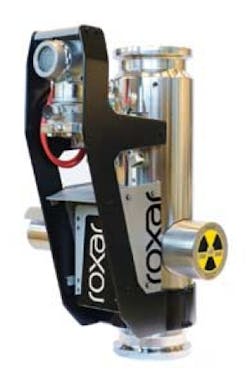
Such challenges range from the high pressures and deep waters that multiphase meters must operate in to sour gas fields with fluctuating H2S concentrations and heavy oil fields with high viscosity and low flow rates. According to the US Geological Survey, heavy oil is known to occur in 127 basins throughout the world with 3,424 Bbbl of “in place” heavy oil. This includes many areas offshore Brazil and parts of the North Sea.
Aligned to these market drivers is increased pressure on operators to manage costs, increase efficiencies, guarantee flow assurance, and enhance production.
This means meters must have greater sophistication than ever. They must have a measurement principle that can handle and accurately describe complex flow regimes so that appropriate multiphase flow models can be applied. They must better define complex flow patterns and handle all types of flow regimes.
Today’s multiphase meters must not only be able to detect the timing of well flow changes and factors that can affect the flow stream, such as slug pattern, emulsions, and paraffin deposition, but also must provide the information a reservoir engineer needs to verify reservoir models and to history-match simulation models.
Finally, they must be operational and effective at lower costs in previously inaccessible locations, and have the necessary flexibility to react to changing production conditions during the field’s lifecycle.
Evolution of multiphase meters
Multiphase meters have changed significantly since they first came onto the market in the early 1990s.
The first commercial meter, for example, was based on microwave technology and operated on a single velocity basis. This assumed homogenous flow and that liquid and gas were travelling at the same speed – clearly an assumption that operators cannot make today.
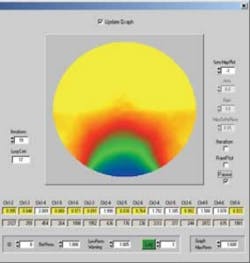
A linear back projection algorithm for image reconstruction. Fifteen independent measurements are taken every four minutes using all six electrodes with a tomo-scan frequency of 250 Hz.
The second generation of Roxar multiphase meters allowed (for the first time) both the velocities of liquid and gas to be measured. In Emerson’s case, the Roxar meter incorporated a Dual Velocity method with calculated phase fractions based on capacitance and conductivity measurements in combination with a single energy gamma densitometer, cross-correlation, and venturi section.
To date, there have been almost 1,000 deployments of this meter with high-profile installations including Total’s Pazflor and AKPO developments and ExxonMobil’s Kizomba C and Saxi fields off the West African coast; and Statoil’s Åsgard and Tordis fields on the Norwegian continental shelf.
For all the benefits of multiphase meters, however, there still were areas for improvement. These included a measurement principal dependent on the reservoir being relatively homogeneous and which provided a simplification of complex flow patterns, as well as a meter which still took up significant deck space with the accompanying maintenance costs and lack of flexibility.
New measurement principle
The new measurement principle is based on an electrode geometry sensor which allows for measurements in separate sectors, as well as the full cross-section. This gives more combinations and more accurate fraction measurements and velocities for each segment.
Rather than only cross-sectional measurements, the new meter can now perform both rotation near-wall measurements and cross-volume measurements, thereby providing a comprehensive flow regime mapping. Asymmetrical flow and less-than-perfect mixtures of the gas and dispersed phase also can be handled in a manner not possible with previous meters with a corresponding reduction in Water Liquid Ratio (WLR) uncertainty.

An example of the improved WLR measurements was shown when the meter was tested at the TUV NEL Multiphase Flow Test Facility.
The plotted data points are single permittivity measurements (not averaged) logged every 15 seconds over two 5-minute periods. The permittivity measurements are stable and the two GVF levels can be differentiated clearly.
A new field electronics system is another important element of the new measurement principle, allowing for capacitance and conductance measurements to be combined in one unit.
The net result is a new measurement principle which allows for accurate understanding of flow regimes, mixing effects and velocity profiles, and is able to detect rapid changes.
Multiple oil and gas flow velocities can be measured – velocities that will also vary over time, due to composition, turbulence, and viscosity.
Increasing flexibility
The size of the new meter at 130 kg (287 lb) and 65 cm (25½ in.) – 80% of the weight and half the length of previous meters – facilitates installation and handling as well as cost savings in terms of installation, maintenance, weight, and deck space. It also allows operators to install the meter on individual wells and in previously inaccessible locations, as well as replacing earlier multiphase meters.
The meter also comes with a field replaceable insert venturi and several venturi sizes to improve accuracy and stability as well as to remove uncertainties in sizing meters based on uncertain production forecasts.
The insert venturi minimizes the effects from swirl and unsymmetrical flow patterns caused by piping geometry upstream of the meter (so-called “installation effects”). It comprises four pressure tappings connected to a pressure ring-room which minimizes such installation effects. The result is a better accuracy (lower uncertainty) on the liquid flow rate measurement.
When liquid flow performance is measured, all points are within specification. Some deterioration in performance may be interpreted at the higher GVF test points but is not significant up to the maximum GVF tested of 91.65%.
With production often changing significantly, the optimal venturi size can be selected for early life and replaced later with a different size in late production life. A compact isolation valve and a Emerson-Rosemount 3095 multi-variable transmitter for pressure, temperature, and differential pressure enables accurate differential pressure measurements with good long-term stability.
Tomography and visualization
Multiphase meters benefit from increased sophistication in tomography and visualization. For example, the installation effects of multiphase meters can now be identified through electrical impedance tomography (EIT), traditionally a medical imaging technique, but also suited for fast dynamic processes like multiphase flow.
Testing the meter
As mentioned, the meter was tested statically and dynamically at the TUV NEL Multiphase Flow Test Facility in East Kilbride, Scotland.
The dynamic flow test compared the meter’s measurement with a reference measurement. This was done for a set of flow loop test points, where each test point is a combination of liquid flow rate, gas flow rate, and water liquid ratio (WLR).
The flow test matrix was 21 flow rig set points, each resulting in three single test points (liquid flow rate, gas flow rate, and water-in-liquid ratio).
References
Subsea Processing Gamechanger Report 2006-2015, Douglas-Westwood Limited and OTM Consulting
Offshore Articles Archives
View Oil and Gas Articles on PennEnergy.com