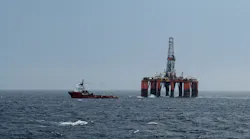
According to the Energy Industries Council, of roughly 80 specialist installation vessels in Europe, only a handful can handle the 14-15 MW turbines that will define the next generation of UK wind farms, and competition for access is intensifying across markets.
These vessels also depend on deepwater berths, high-load quays and extensive laydown space—capabilities concentrated in only a small number of UK ports.
Even when investment is secured, port expansion timelines can stretch six to 10 years, meaning infrastructure lags behind demand.
Meanwhile, vessels waiting at anchor continue to accrue day rates that do not stop for congestion.
Recent years have exposed how fragile this balance can be. Post-pandemic congestion disrupted component supply chains across European ports, while labor shortages in specialist offshore roles added further friction to maintenance and construction schedules in the North Sea. What emerged was not a set of isolated incidents, but a clearer picture of how dependent offshore energy delivery is on logistics systems that rarely feature in strategic planning.
Where those systems are upgraded, the impact is measurable.
Case study: A recent ASCO project for a major North Sea operator replaced fragmented workflows with an integrated digital model combining visibility tools, automation and ERP integration. The result was an 80% reduction in processing time and a 54% reduction in dispatch time. The implication is straightforward: logistics performance is not fixed; it is design-dependent, and when improved, it reshapes delivery capability across entire offshore programs.
As the UK expands its offshore energy base, these pressures will intensify further.
Floating offshore wind will demand more complex installation strategies and deeper-water vessel capability, while carbon capture infrastructure introduces new offshore modification and subsea deployment requirements.
In this environment, energy security will depend less on generation alone and more on the vessels, ports and supply chains that determine whether projects can be delivered on time at all.